Elephants are herbivores with very large appetites. Actually, a living elephant is capable of eating 150 to 200 kilos of food every day. Their mouths play a critical role in that.
Unlike many other animals that simply bite their food, elephants use their trunks to pick up the food and put it in their mouths. The molars will then chew and break down the food after it is deposited in the mouth.
Elephants chew by shifting the direction of their jaws. Such a grinding action is very proficient in disintegrating even the toughest plant parts like grass, bark, and roots.
They need to be good at chewing to get nourishment from a large number of plants. Being able to digest food rapidly is one factor that enables them to meet their high energy requirements.
How Do Trunks And Mouths Work Together?
The trunk and mouth are a well-coordinated system. As the mouth takes care of chewing, the trunk serves as a very flexible instrument for collecting food.
Thanks to thousands of muscles inside the trunk, it is capable of very fine movements. Elephants use it to tear down tree branches, snatch grass, and even unearth roots. When the food is ready, the trunk puts it right into the mouth. Such a gainful assignment splitting!
Further to food gathering, the trunk is instrumental in the water-drinking process as well. Elephants draw water into their trunks, then spray it into their mouths. This technique helps them take in large quantities of water fast.
Without the help of the trunk, the mouth alone wouldn’t be sufficient for the task of feeding properly. These two together compose a very strong system that makes the elephant’s existence possible.
What Types Of Dental Structures Are Found Inside Mouths?
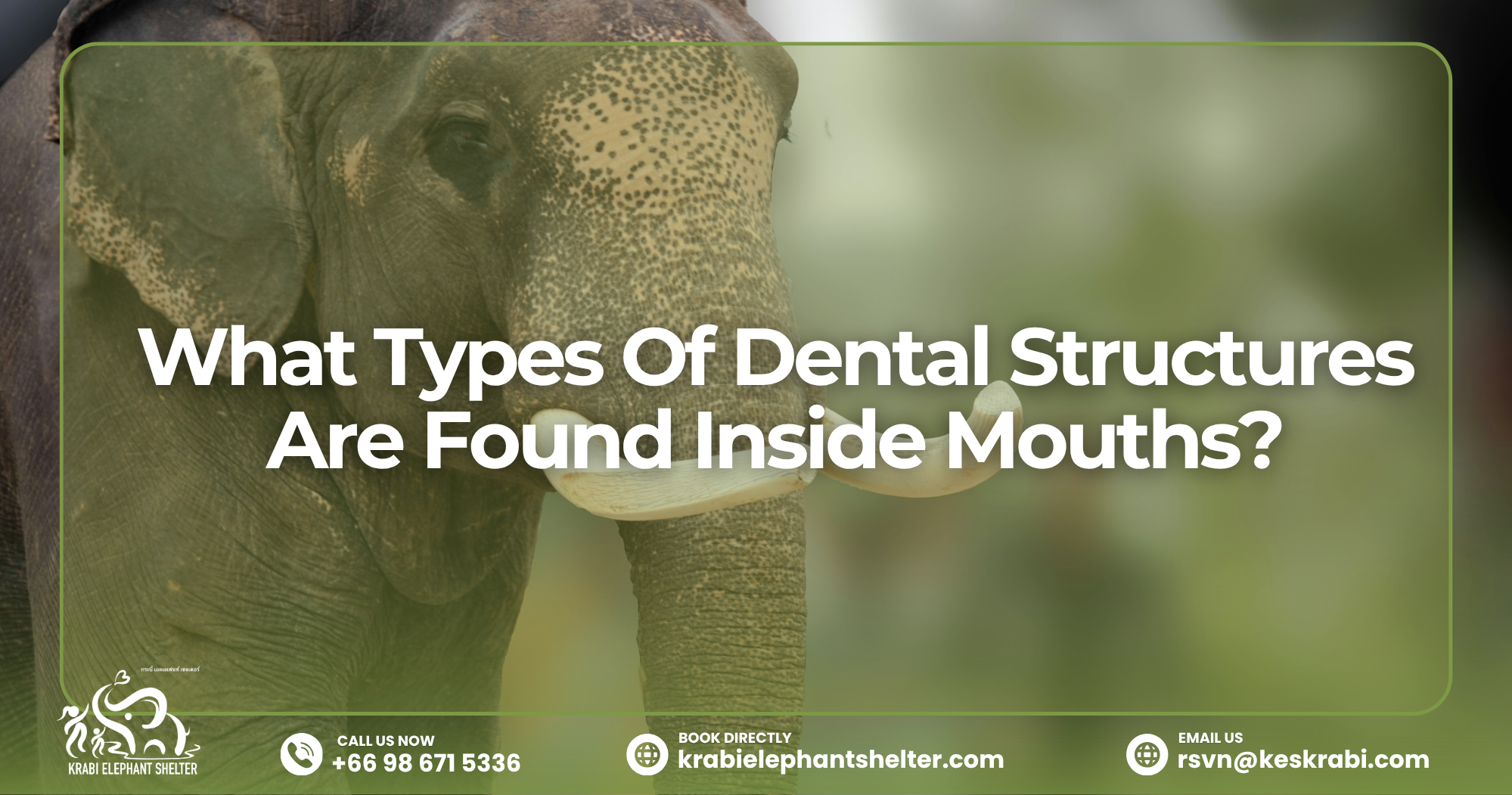
The dental system inside elephant mouths is very different from that in any other mammal. Unlike humans, who possess a complete set of teeth, elephants mainly depend on just four huge molars at a time for chewing.
Elephants go through successive changes of molars during their lifespan, six sets in total. As the front teeth wear down due to continuous grinding, new ones progressively move forward from the rear of the mouth to replace the old ones.
This is a necessary mechanism since their diet leads to substantial dental wear. When the last set of molars is completely depleted, an elephant may not be able to eat, which could ultimately lead to its death.
Although tusks are transformed upper incisors, animals do not use them for chewing purposes. Rather, tusks are used for various activities like digging, bark stripping, and fighting.
The molars still play the major role in feeding by helping elephants digest huge amounts of plant materials with ease.
How Do Elephants Vocalize Using Their Mouths?
Elephants are extremely vocal creatures, and their mouths contribute to making sounds for various purposes.
They can generate:
- Trumpets
- Rumbles
- Roars
- Snorts
Trumpeting is among the loudest elephant sounds, and many people are already familiar with it. It is often an expression of their excitement, fear, or making the rest of the herd aware of the situation.
Rumbles are lower-pitched sounds that elephants use to communicate over long distances. In fact, some of them are so deep that they are inaudible to us humans, but other elephants can feel them through vibrations.
The mouth remains very important in generating these sounds together with the trunk and vocal cords. Elephants change the airflow and tighten or loosen their vocal cords, and as a result, they make different calls.
Communication is the basis for social bonding, alerting each other of danger, and planning group activities.
The Importance Of Elephant Mouths In Survival
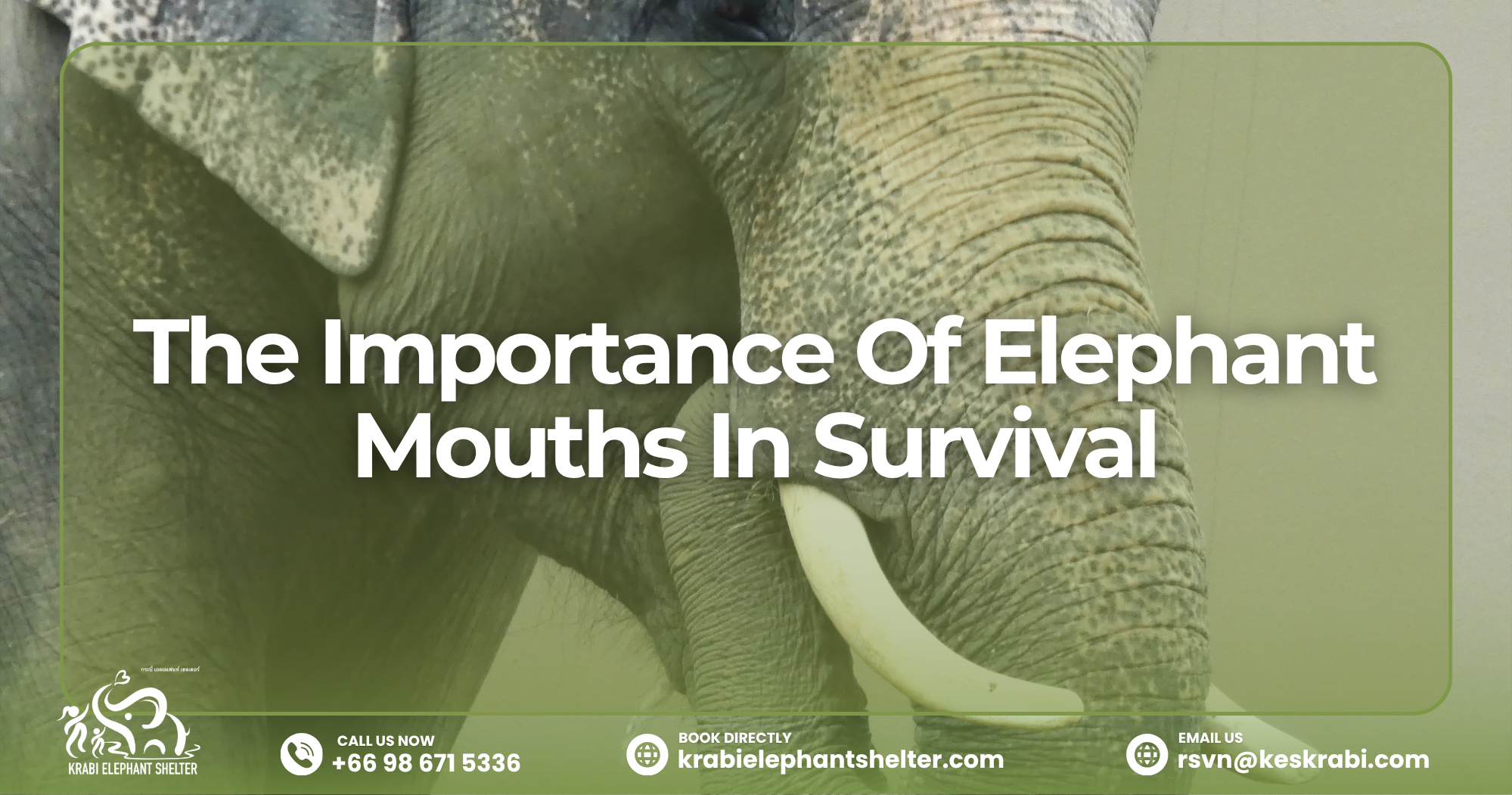
The shapes and roles of elephant mouths have a direct impact on their ability to live. Good feeding methods allow elephants to meet their enormous energy requirements, whereas strong teeth grant them the power to chew the toughest plants.
What’s more, the connection from the trunk to the mouth results in an extraordinary feeding tool incomparable to any other animal. Due to this trait, elephants are capable of changing different types of environments, like forests and grasslands.
Besides, their capability to produce vocal sounds enables very complex social interactions among family members.
Even the smallest details in an elephant’s mouth, such as the teeth grinding or the force of a bite, play a role in maintaining health and supporting daily activities.
What Role Does Mouth Health Play In An Elephant’s Well-Being?
This is something that people rarely discuss. The health of a mouth in an elephant has a direct bearing not just on the elephant’s quality of life but also on its lifespan.
The most visible one is tooth wear. Once molars are worn down, the need to chew properly lessens. An elephant that chews poorly will not obtain sufficient nutrients even when food is plentiful. Eventually, this will cause weight loss, weakness, and overall deterioration.
Dental issues can, unfortunately, progress rapidly in captive settings. Hard or inappropriate surfaces, unrealistic diets, and restricted foraging behaviors are the factors that lead to accelerated wear and tear. Good sanctuaries and care facilities closely watch the elephant’s dental health since it is one of the most reliable indicators of the elephant’s overall well-being.
Healing of gums, proper jaw alignment, and the condition of tusks are also important. For example, a broken tusk can influence the way an elephant seeks food and interacts with its surroundings. A healthy mouth literally keeps an elephant alive.
That is one of the reasons why adequate nutrition and natural foraging are not just good to have in elephant care but are indispensable right down to the teeth.
Why Every Part Of The Mouth Matters
Every element of an elephant’s mouth has a job. The molars break down food. The tusks help with foraging. The vocal structures keep herds connected. And the whole system works in partnership with the trunk every single day.
It’s easy to overlook something as basic as a mouth when thinking about such a complex animal. But for elephants, it’s one of the most important tools they have—for eating, communicating, surviving, and living well.
The Mouth That Moves A Giant
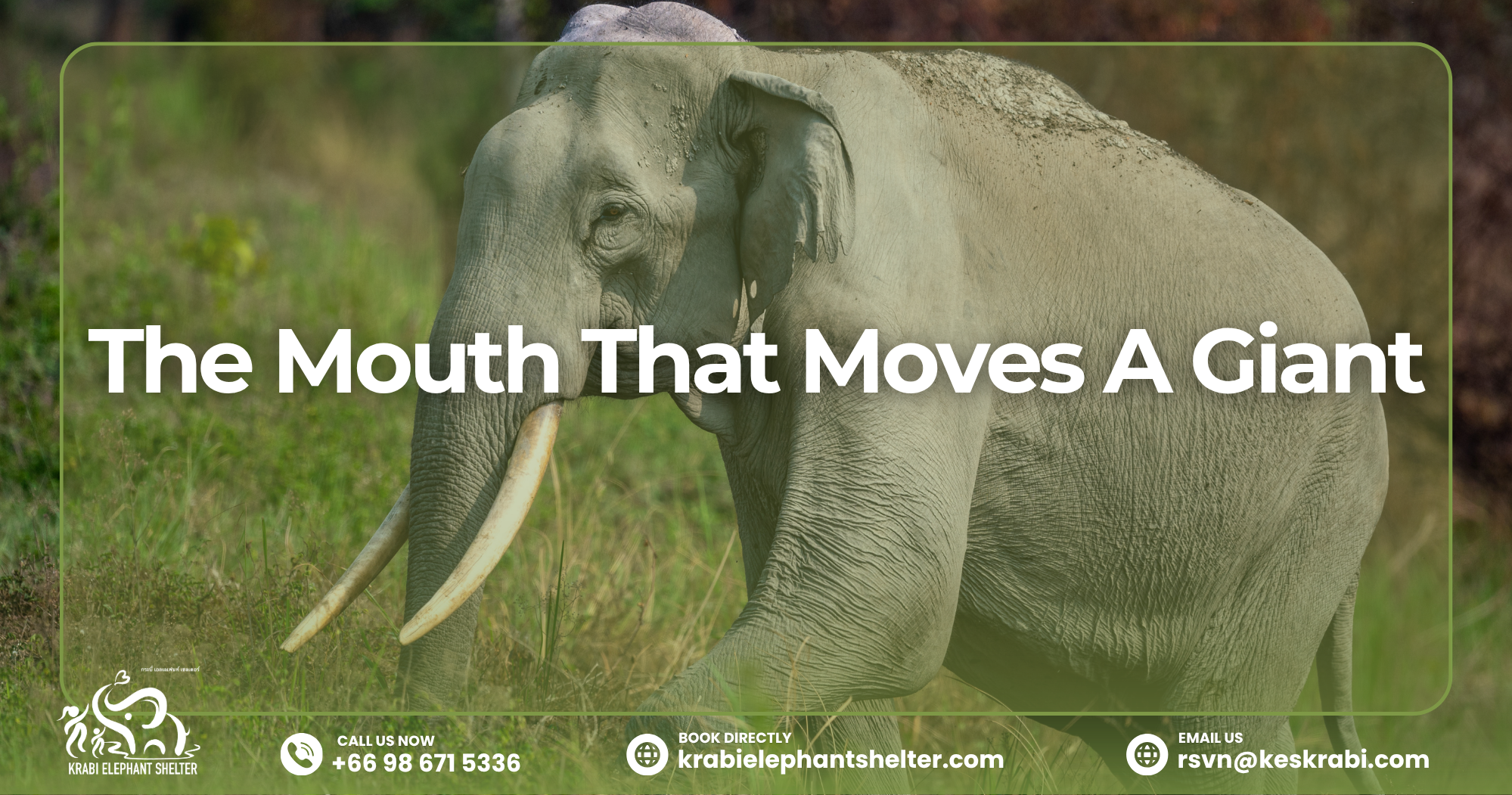
Elephants are perfectly capable of surprising us with their various abilities. However, sometimes the greatest wonders are those right in front of us but unnoticed.
How can a mouth chew 200 kilograms of food every day? The teeth that get replaced six times throughout a person’s life. The signals can be conveyed to one another by sending sounds through the ground for long distances. It is with the structures, which hardly anyone notices, that all these activities are initiated and terminated.
So closely examining the activities of elephants around eating, drinking, communication, and survival will reveal that they are extremely accurately designed. Nothing is left to chance. Every component has a function.
However, this also means that if something goes wrong, if the teeth wear out too quickly, if the animals cannot gather food freely, or if the food quality is poor, the repercussions spread everywhere. The health condition, the behavior, and the longevity of the animal. Everything is related.
If you’d like to see elephants living the way they’re meant to, Krabi Elephant Shelter offers an experience built around real welfare — not performance. Come and witness these animals up close in a place that actually puts them first.