Thailand offers one of the most intimate wildlife experiences in the world—elephant bathing in Thailand. You stand in a river, mud pooling around your ankles, watching an elephant splash around without a care. It’s genuinely special. But one important question keeps following this experience—is elephant bathing in Thailand good for elephants?
Is Elephant Bathing In Thailand Ethical?
Elephant bathing itself isn’t harmful. Elephants bathe naturally in the wild. They seek water, wade in, roll around, and spray themselves without any human prompting. So water forms a natural part of their daily life.
The problem isn’t the bathing. It’s everything surrounding it at certain venues. How the elephant got there. How trainers handled it. Whether it has any choice in the interaction is unclear. It can walk away if it’d like to.
At exploitative camps, staff treat bathing experiences as just another performance. Trainers position, direct, and keep elephants compliant through methods that cause real harm. The water looks fun. However, what happens outside of tourist hours often doesn’t.
Ethical elephant bathing in Thailand is a genuine practice. But it looks very different from what most brochures show. The elephant leads, the human follows.
Why Do Elephants Love Water?
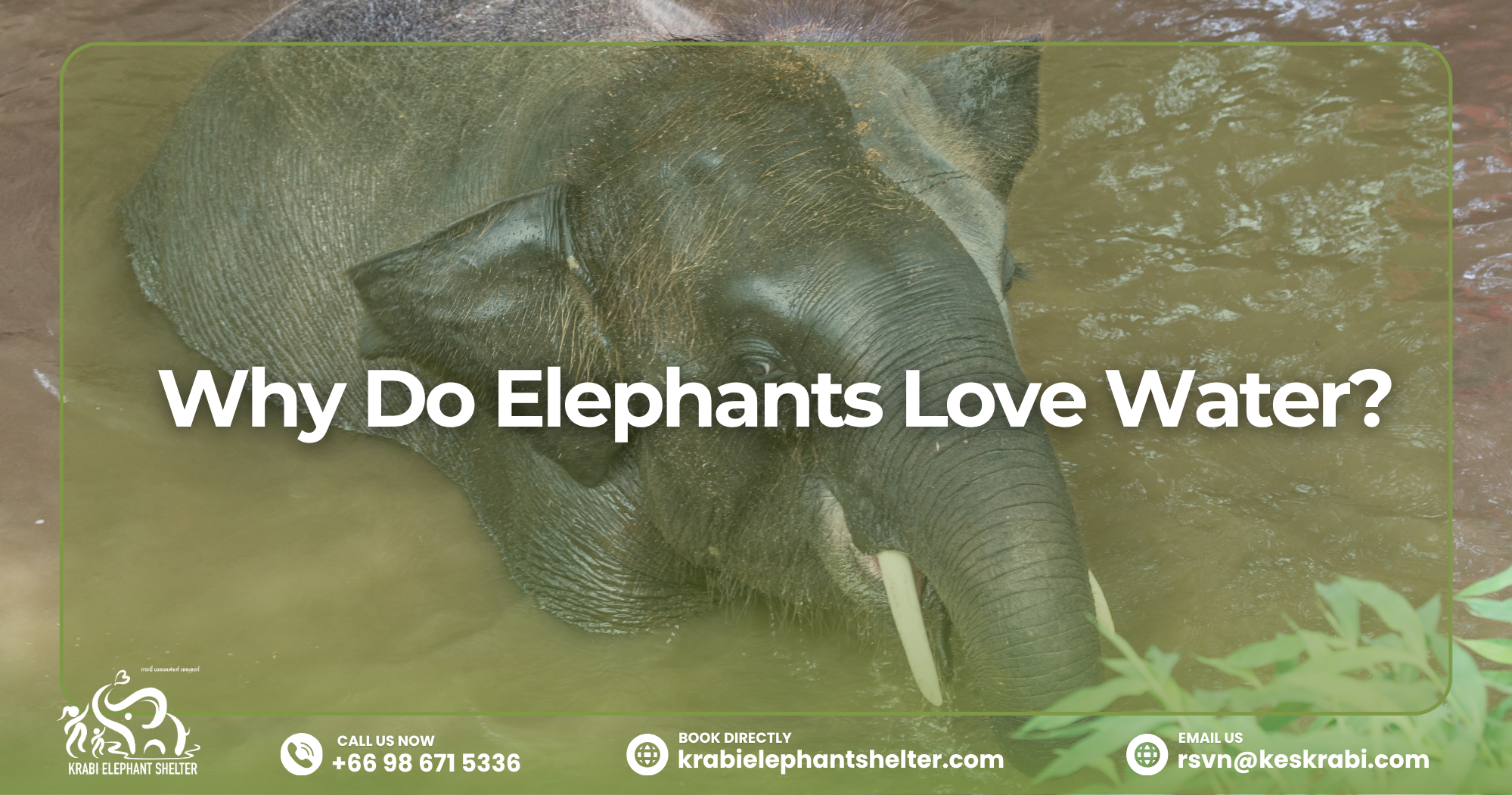
Elephants are attracted to water for several reasons, most of which are quite reasonable and practical. To begin with, water is central to thermoregulation, a function that humans perform by sweating but that elephants, in a way, cannot. Their skin tends to absorb heat rather than allowing it to be evaporated through sweat. In the climate of Thailand, the heat can accumulate rapidly. Thus, a water bath is the fastest and most effective way for them to cool down.
On a similar note, mud helps prevent overheating and provides a few extra benefits. Elephants apply a layer equivalent to a natural sunscreen by scrubbing their bodies with mud and letting it dry on their skin. At the same time, the layer works as a repellent against the biting insects. Hence, besides the fun element, it is a measure of personal care, a reason to revel in nature.
And a factor of enjoyment that goes beyond just the element of use. Elephants are known to have a keen liking for water. Very young ones end up having a lot of fun, at times mistaking the whole thing for simply play that they go at with great gusto.
Research shows that the source of water has a huge effect on how elephants choose to live their lives. They don’t just drink but engage in behaviors associated with water, like cooling down and socializing. The concept of elephants looking forward to a water source gives a whole new perspective to the idea of encountering them.
What Does Ethical Thailand Elephant Bathing Look Like?
Elephants have control over their movements. You don’t see an elephant chained, poked by a hook, or restricted only to a small place for bathing. The ethical bathing of elephants is done in natural water bodies, such as rivers, ponds, or natural pools, where the elephant enjoys free movement.
No one forces the elephant into the water, but rather, the elephant leads the interaction. A well-run rescue will not pressure the elephant to perform a “show” for visitors. It is excellent if the elephant chooses to bathe while visitors are watching. But if one day, the elephant does not feel like bathing, the staff also acknowledges the elephant’s unwillingness.
Moreover, for an elephant bathing experience, the human should not mount the elephant at any point. Sanctuaries that offer riding and bathing do not prioritize animal welfare. Indeed, in the very few truly ethical locations, the two elements do not coexist.
Groups stay small. Large crowds create stress. As a result, ethical venues limit the number of visitors around elephants at any one time. If a bathing experience feels like a theme park, it probably functions like one too.
Mahouts rely on calm, positive communication rather than fear. Their bond is built on trust, not control.
What Harmful Practices Should Tourists Avoid During Elephant Bathing?
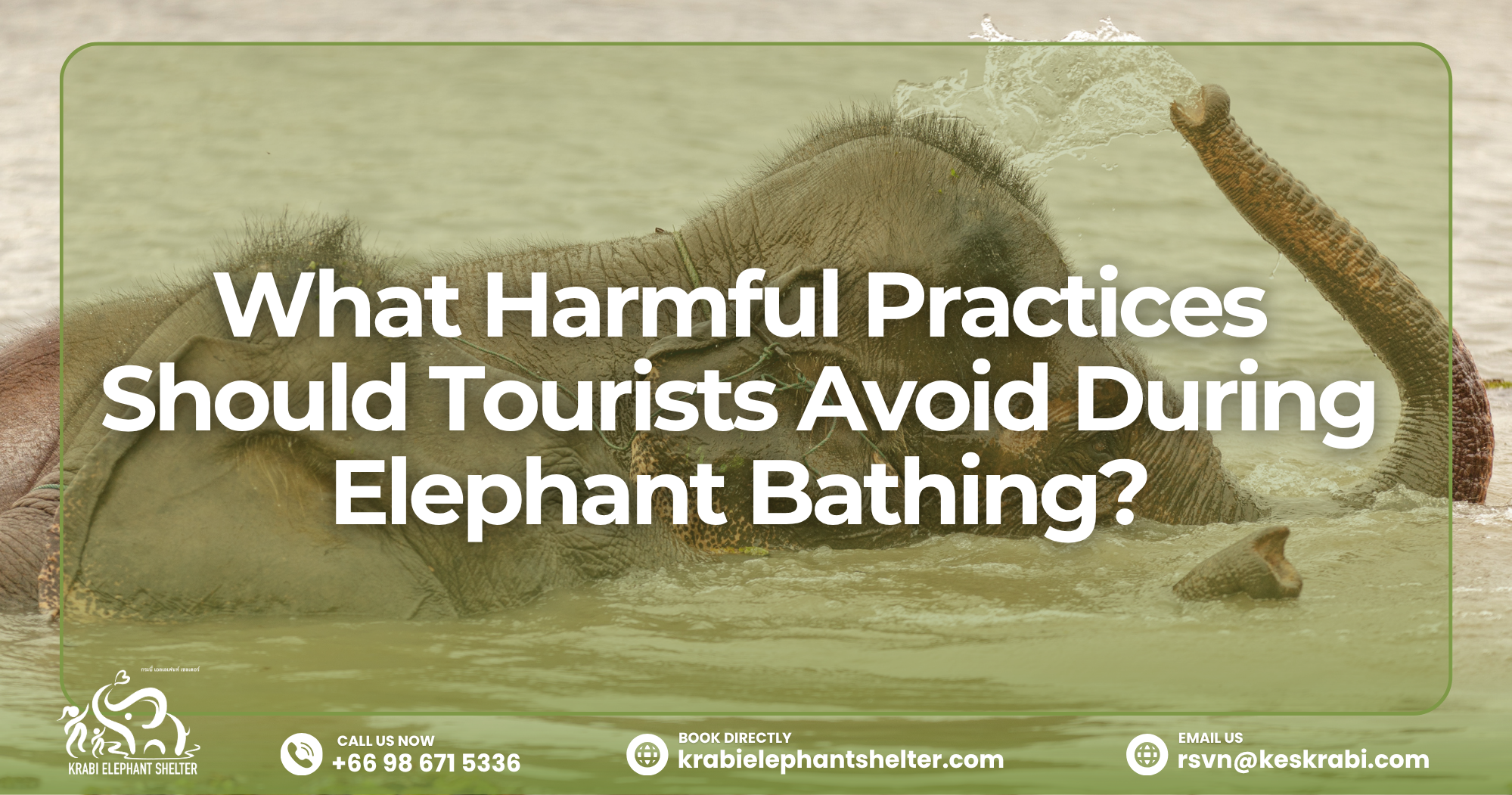
Elephant riding is by far the top offender when it comes to documented harm. Simply put, an elephant’s skeleton is unsuitable for carrying a human’s weight, especially for long, repeated hours. Naturally, it causes physical harm that increases with every session. An ethical elephant sanctuary will never offer this activity.
The harsh training method known as Phajaan, the breaking process, is responsible for most of the tame elephant behavior that we see. To train elephants to become submissive to humans, elephant handlers separate the calves from their mothers, cage them, and inflict pain until the elephant gives in. Hence, any place that shows elephants performing tricks will have this kind of history.
Sometimes, people think that painting elephants is a nice and fun thing. But the truth is it isn’t. Elephants are not painting because they like the activity. They are painting because their trainers have forced and conditioned them to do it. It is not a talent. It is a behavior.
Overcrowded bathings show a priority to the photo opportunity rather than the animal’s experience. On a strict timetable, trainers force elephants into water, while the elephants are surrounded by dozens of tourists. In that situation, the elephant does not enjoy itself; it simply obeys.
Which Thai Elephant Sanctuaries Offer Ethical Bathing Experiences?
Thailand has seen a genuine shift in recent years. More sanctuaries are moving away from performance-based models toward observation and natural interaction. Nevertheless, not all of them are equal, so the good ones are worth finding.
What genuinely ethical sanctuaries share is a consistent set of principles. No riding. No shows. No bullhooks. Elephants live in social groups and have access to natural environments. Furthermore, bathing occurs according to the elephant’s preferences.
Staff answer direct questions openly. They won’t deflect when you ask about training methods or how their elephants came into their care. Transparency is usually a reliable indicator of integrity.
If you’re visiting Krabi and want an experience built around what’s actually good for the elephant—not just what looks good on camera—Krabi Elephant Shelter is genuinely worth serious consideration. Their approach puts elephant welfare above theater every single time. It’s the kind of visit that stays with you for the right reasons.
The Experience Is Better When It’s Real
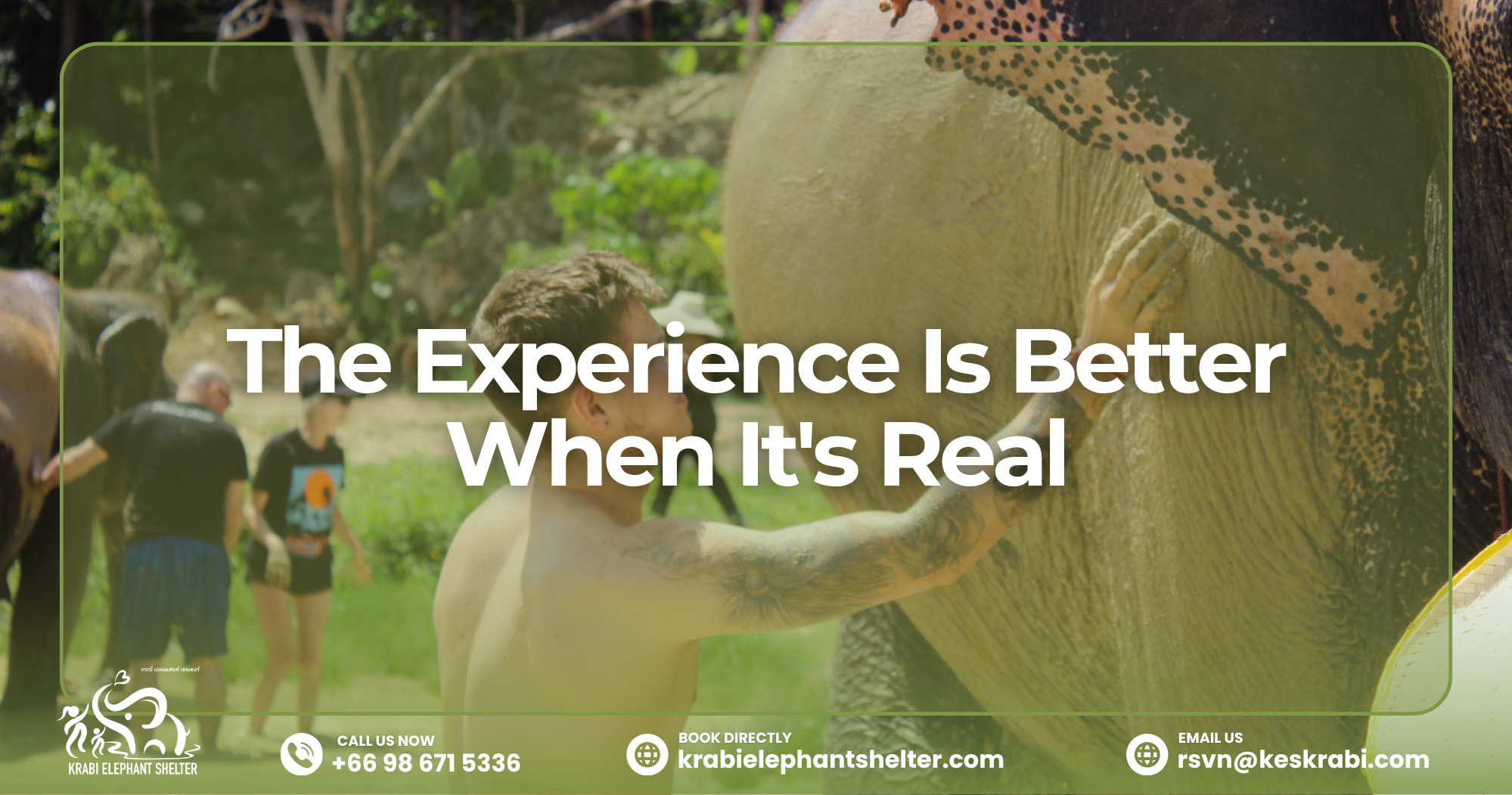
Here’s something worth sitting with. The most memorable elephant encounters aren’t the choreographed ones. Instead, they’re the unscripted moments—an elephant choosing to stand near you, water spraying unexpectedly in your direction, or a calf doing something ridiculous in the shallows.
Ethical elephant bathing in Thailand can be a genuinely moving experience. Watching an animal that large find that much joy in something as simple as water — it puts things in perspective. And that feeling only lands properly when the elephant is actually happy. When it has choices. When it isn’t performing for anyone.
Choose the experience that gives you that. Visit Krabi Elephant Shelter and see what elephant tourism looks like when someone finally gets it right.