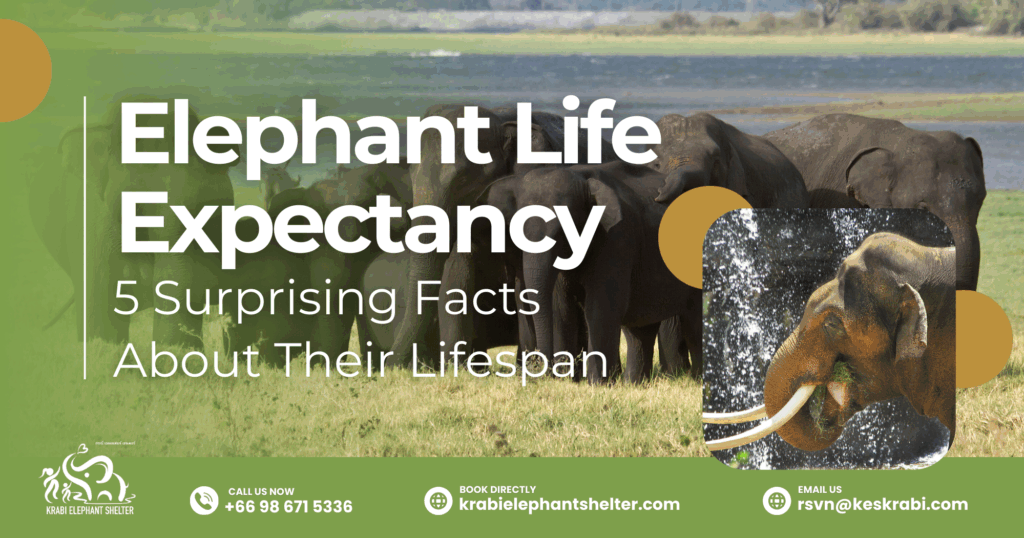
Elephants are the most interesting creatures on the planet, and people appreciate them because of their intelligence, power, and strong emotional attachment. Another very interesting thing about these gentle giants is the age of elephant.
Knowing the age of an elephant not only tells us how old the animal is, but it also gives us important information on its health and behavior. It also guides how the elephant should be treated in sanctuaries to ensure proper care.
This blog will discuss the amazing facts about the age of elephant not only in terms of their lifespan. It will also cover the indicators of their life cycle and how nature, such as Krabi Elephant Shelter, helps them survive to every age.
How Long Do Elephants Live?
The age of elephant varies depending on the species and the care they receive. The African elephants can live to a minimum of 60-70 years in the wild, and Asian elephants live to an average of 48-60 years. Nevertheless, the lives of the elephants in sanctuaries are usually longer and healthier due to the treatment they get. They have a much better life with proper nutrition, care, and the absence of hard work or abuse.
Environmental conditions also affect the age of the elephants. Poaching, lack of food, and destruction of their habitat are some of the challenges encountered in the wild that reduce their lifespan. Conversely, a secure environment such as Krabi Elephant Shelter for elephants to grow old. It ensures they are protected from abuse and treated with care.
How Do We Know The Age Of Elephant?

It is not always easy to estimate the age of the elephants but there are certain indicators that are used by caretakers and scientists. Their most precise indication is the size and shape of their teeth. Elephants have six sets of molars throughout their lives, and by checking the set that they are in, one can estimate the age of the elephant.
The other indications will be the size of their body, the texture of their skin, and the shape of their tusks. Younger elephants are smaller in size and have smoother skin. In contrast, older elephants have rough, wrinkled skin, and their tusks are usually worn. These physical differences help distinguish age within the herd.
It is also due to behavior–the playful motion is usually typical of young elephants, slowness and stillness being the usual characteristics of the older ones.
Understanding The Elephant Life Cycle
There are various life stages in elephants, just like it is the case with human beings. The reason behind this is the fact that the awareness of such stages would allow the caregivers to offer the best assistance.
Calves are also known as baby elephants, and they weigh around 200 pounds. They are dependent on their mothers. At this point, they are curious and naughty and gain the necessary social skills. They are self-reliant because they develop into juveniles even though they are still close to the herd. The adolescents begin to test and display strength and boldness, and they are likely to take risks in the company.
Adult elephants are at the peak of their strength, and they play critical roles in their herds. It is also during this period that they are capable of being parents themselves and sharing the knowledge and safety with the young ones. Finally, the elderly elephants are slower, and they need the support of the herd.
At this point, they are made to feel at home in the Krabi Elephant Shelter. They are also given access to veterinary services to ensure their health and comfort. This allows them to spend the remaining years of their golden age in peace and care.
The Stages Of Elephant Life

| Life Stage | Approximate Age | Characteristics | Care In Sanctuary |
| Calf | 0–5 years | Weigh ~200 lbs at birth, dependent on mother’s milk, playful, learns social skills | Bottle feeding or soft food, constant supervision, and socialization with herd |
| Juvenile | 5–10 years | More independent but still stays close to herd, growing rapidly | Balanced diet to support growth, opportunities for play and exercise |
| Teen | 10–20 years | Testing strength, learning dominance, playful but sometimes aggressive | Monitoring behavior, space for safe exploration, gradual introduction to adult roles |
| Adult | 20–50 years | Strongest stage, active parents, leaders in herd, full responsibility | Nutritious diet, regular exercise, tasks that stimulate natural behaviors |
| Elderly | 50+ years | Slower, worn teeth, may suffer joint issues, more reliant on herd | Softer food (bananas, pumpkins, boiled vegetables), frequent health check-ups, comfortable resting spaces |
What The Age Of Elephant Tells Us
The age of the elephants gives crucial hints regarding their needs. Young elephants need a lot of food and space to play, and adults are in need of nutritious diets to stay energetic in their active positions.
Advanced elephants usually require specialized attention due to their age-related needs. They need food that is easier to chew because of rotated teeth, along with frequent health examinations. These measures help manage age-related illnesses and ensure their well-being.
In Krabi Elephant Shelter, the age of each of the elephants is taken into consideration when designing care routines. Such a personal treatment means that not only do the elephants live longer, but they will also live a happier, healthier life.
Caring For Elephants Of All Ages

There must be skills and fondness when rearing the elephants at different stages. The calves need constant attention, play, and nutrition. They are normally bottle-fed or fed on soft and easy-to-digest food to aid in their growth. They should also have ample socialization with other calves, as well as with caretakers, to enable them to grow into trusting and confident beings. Playtime is important because it not only entertains them, but also makes them stronger in muscles and coordination.
Elephant Calf Care
There is also the adult who needs nutrition that develops strength and space to move around. They also frequently eat fresh grass, fruits, sugarcane, and supplements so that they can keep strong and healthy. Adult elephants are the most active, and that is why they need to exercise daily, take long walks, and have a chance to bathe and relieve themselves in water. Caretakers also pay close attention to their workload and ensure that they are neither stressed nor overworked since the age group is usually the main support of the herd.
Adult Elephant Needs
The elderly have special needs, including a low-calorie diet and regular check-ups to prevent arthritis or other age-related disorders. Mature elephants are fed on easier food such as bananas, pumpkins, or boiled vegetables, which they can easily chew as their teeth degenerate. They should also have light exercises to ensure that their joints are flexible, and they should have ample sleep in cool and comfortable places. Routine veterinary visits change particularly, as the individuals who take care of them should monitor any indicators of joint pain, vision loss, or weight loss.
Caring For Elderly Elephants
At the Krabi elephant shelter, the elephants (both the young and the old) are all lying as a family. Caretakers determine the age of the elephants to create a specific feeding pattern and monitor their health. This helps them provide a caring and secure environment tailored to each elephant’s needs. This dedication allows the elephants to develop in a way that they would in no way ever be able to do so in either captivity or within the wild environment when they are under stress.
Why The Age Of Elephant Matters For Conservation
The age of the elephant also plays a significant role in conservation. Older elephants should not be killed, as they impart vital survival knowledge to the herd. They also educate younger generations on migration routes, food sources, and social behaviour. Meanwhile, by preserving calves and youngsters, one is guaranteeing the life of the species.
The necessity to provide care to the elephants at each age is emphasised in sanctuaries such as Krabi Elephant Shelter. We save them and provide them with the opportunity to live long and fruitful lives so that future generations will also see the great animals.
A Lifelong Bond Between Humans And Elephants

Human beings have had a relationship with elephants over the centuries, and the time has come to make sure that the relationship is built based on respect and care. Knowing the age of the elephant and what it reveals about their needs, we open the way to the whole and happy life of the elephants.
Such places as Krabi Elephant Shelter have been instrumental in portraying what can occur when knowledge and compassion meet. They demonstrate that elephants are not creatures of power only, but animals that should be treated with dignity throughout their life. One of the ways through which we can repay these gentle giants is by supporting such sanctuaries.
We respect the natural world when we respect elephants at any age. In Krabi Elephant Shelter, they have demonstrated that through proper support and care, the elephants can have long, healthy lives. The elephant is not only a scientific fact in life, but it is a monument of endurance, of love, and of living together.
Book your trip to Krabi Elephant Shelter now!
By visiting Krabi Elephant Shelter, your entrance fee directly supports the elephants’ care, including their food, medical treatment, and habitat upkeep. It’s a meaningful way to make your trip count—contributing to long-term animal protection efforts while enjoying a once-in-a-lifetime encounter with Thailand’s most beloved giants.
Phone: (+66) 98 671 5336
Email: [email protected]
Book directly at krabielephantshelter.com