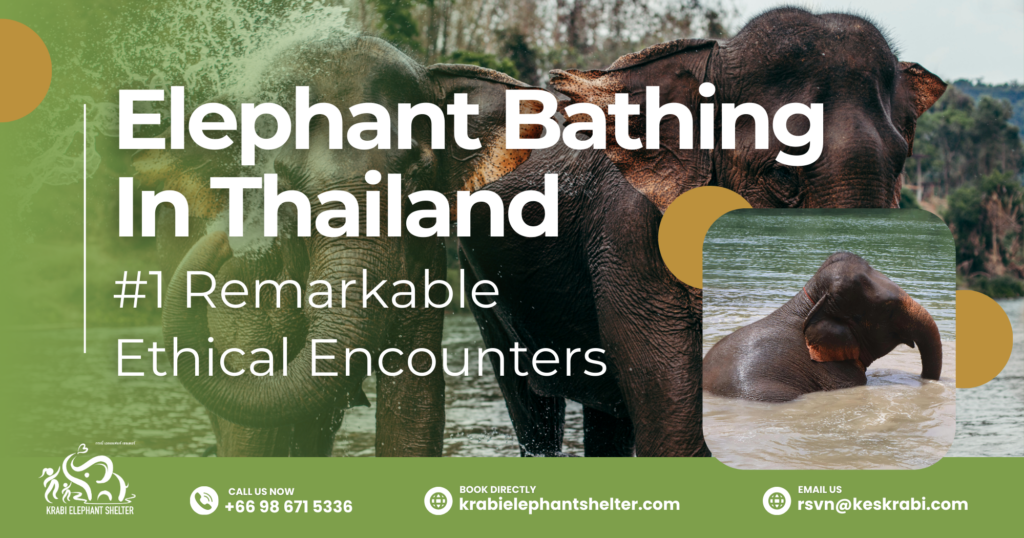
Elephants are primarily land animals, and thus, one usually sees them in forests and grasslands. However, water has a significant place in their life too. Many people remain curious about whether whales can swim, as it’s challenging to imagine them swimming gracefully given their immense size and weight.
On the contrary, elephants are not only excellent swimmers; they are also among the strongest and most confident swimmers in the animal kingdom. Their water-related behavior unveils a host of fascinating changes, sharpness, and well-honed survival skills obtained over a long time.
Are Elephants Natural Swimmers?
By their very nature, elephants are swimmers, though they do not learn this from someone or get it forced upon them. Calf elephants go to water with their families, and, next thing you know, they are swimming poodle style without any assistance. Hence, this skill acquisition happens via natural growth, as is the case with other abilities such as walking. For their sustenance, wild elephants need to roam to different areas and inevitably come across rivers, lakes, and floodwaters from time to time.
It is marvelous to see that, whether in Asia or Africa, wild elephants by the riverside during migration season do not hesitate but go for a swim. They are not frightened by strong rivers and do not struggle to get out of the water. Instead, they keep a slow, calm pace and, with the help of their memory and the pack leader, manage to get through.
Can Baby Elephants Swim?
Elephants can indeed swim, though the youngsters mostly need the aid of the elders. By nature, calves can swim just like the adult members of the family. However, due to their smaller size and shorter trunks, they lack the capacity and proficiency of maternal elephants at river crossings. Mother elephants safeguard their calves, ensuring their inclusion within the group.
The mother and other members of the elephant family herd constantly provide support to the little ones—emotionally as well as physically. Such kind of behavior shows that the elephant family is very close-knit and has a strong social structure. With the passage of time and a lot of practice in the water, the calves eventually become skilled and courageous swimmers and can handle themselves easily.
How Do Elephants Swim In Deep Water?
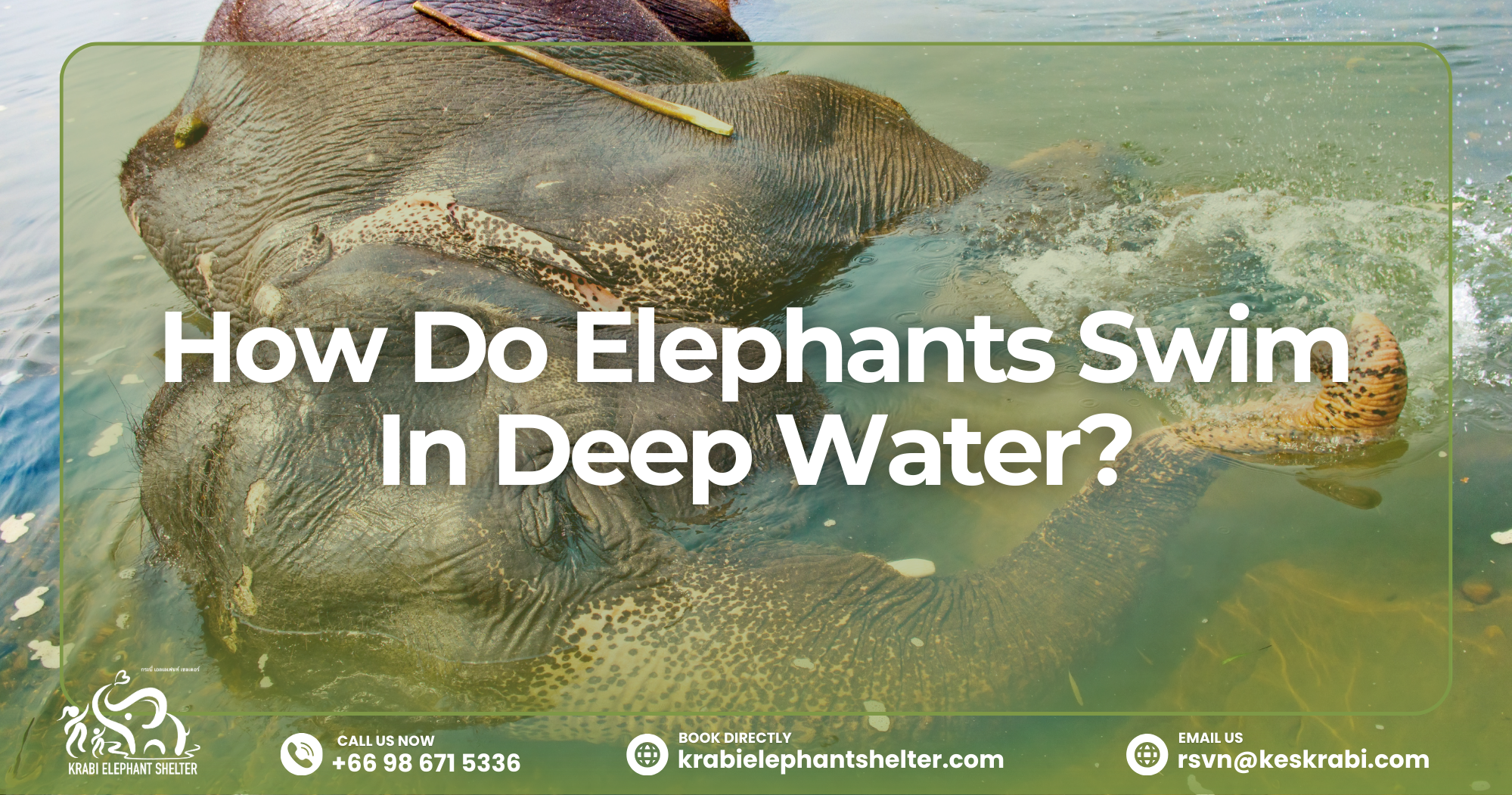
Elephants walk their legs very gently through deep water as if they were walking on the ground so as to make the most of the water resistance. This way, they do not consume too much energy while covering a long distance.
Elephants keep their bodies mostly horizontal while swimming, which helps with balance and stability. They do not splash excessively or make frantic movements. Their calm approach reflects both physical adaptation and high intelligence. Swimming becomes an extension of their natural movement rather than a stressful activity.
How Elephants Use Their Trunks As Snorkels
The most outstanding feature of an elephant’s swimming is its trunk. There are up to 40,000 muscles in an elephant’s trunk, which makes it one of the most mobile body parts among animals. The elephant’s trunk serves as a natural snorkel when it swims, as the animal raises the tip of its trunk to breathe.
Elephants can hold their breath and remain completely submerged without any difficulty. This skill facilitates their movement in the deep water, muddy rivers, or even the sea. Besides, the trunk is flexible, and thus, the airflow is not blocked even if there are waves or currents.
How Long Can Elephants Stay Underwater?
Elephants are capable of holding their breath for quite a while, actually longer than most people guess. Typically, if an elephant goes underwater, it can cram its lungs full of air and stay without breathing for half a minute to 2 minutes. When calm and when having fun or bathing, some elephants have been found submerging for a bit longer than the average time.
Nevertheless, an elephant will likely not have to stay submerged for very long. When they must cross rivers over long distances, the elephant will keep its nose above water so that it can breathe freely without stopping. Breath-holding is something that the elephant uses for diving momentarily or passing underwater obstacles; it is not the main way of swimming.
How Far Can Elephants Swim?
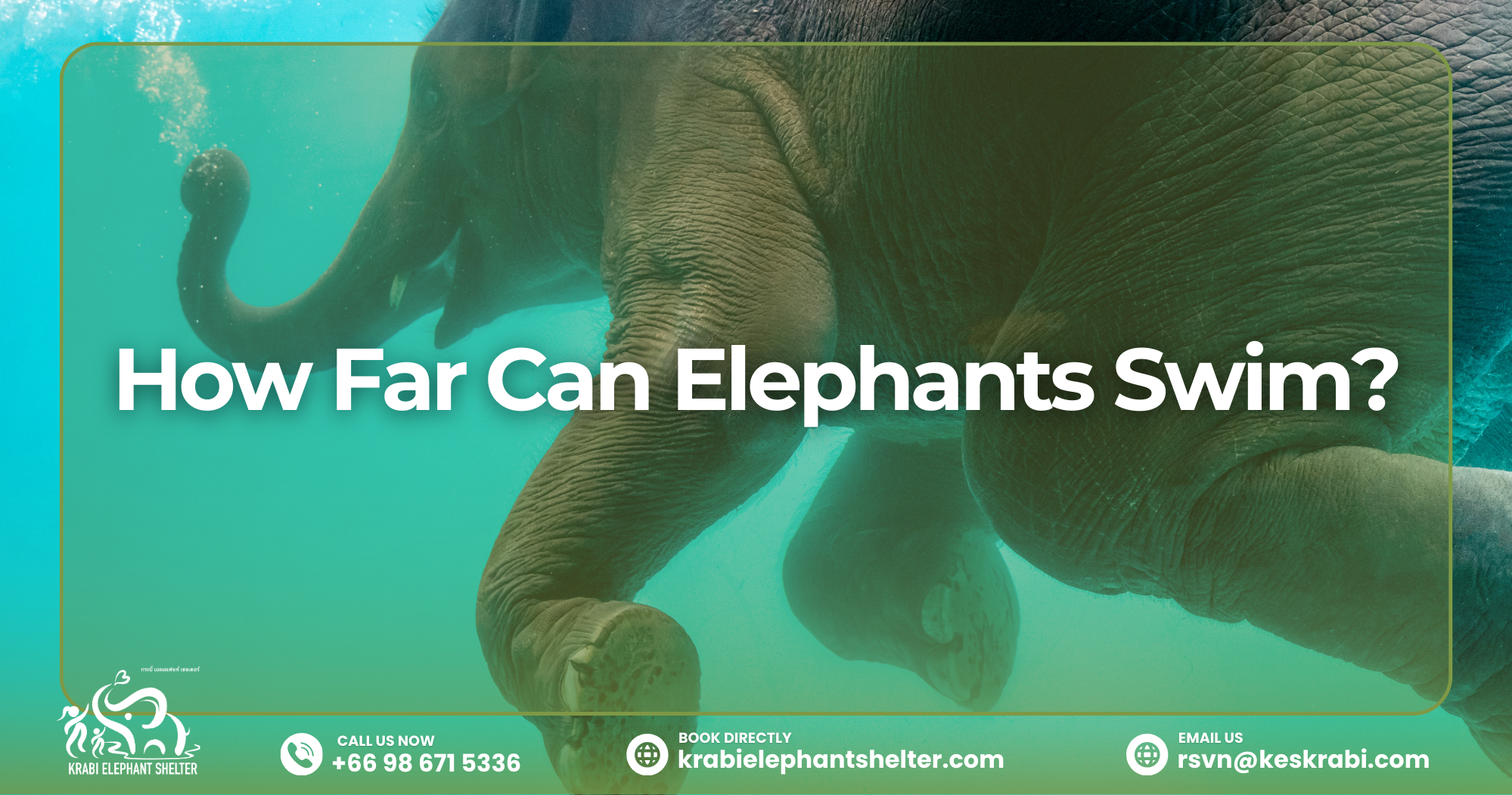
Elephants can swim far beyond what the average person thinks. In their natural habitats, people have observed elephants swimming continuously over distances of several kilometers. Old and new reports say elephants swim from one island to another, guided by feelings and memory, not just sight.
They do not possess high-speed swimming capabilities but rather have the fitness level to keep going for a long time. Elephants will constantly make forward movements, thus saving energy and still figuring out the way. Apart from the strong muscles, controlled breathing, the ability to stay calm, etc., all help the elephants to accomplish long-distance travel through water if necessary.
Why Do Elephants Swim In The Wild?
Swimming is just one of the daily activities used by elephants to maintain their life. Besides, elephants swim to be able to cross rivers, to get to the feeding grounds, and to find water sources during the dry season. In a region where monsoons occur, the flooding of forests and rivers necessitates elephants’ swimming for daily mobility.
It is also the case that through bathing and swimming in the water, elephants can get rid of heat. The problem is that elephants do not have a lot of sweat glands, and their skin is very thick, which makes it hard to cool off when on land. Hence, swimming and bathing become their favorite methods of lowering body temperatures.
Elephant Swimming In Captivity And Sanctuaries
In humanely run sanctuaries, swimming is viewed as a natural behavior that is supported, not as a performance. Elephants can decide on their own to go into a river or a pond; no pressure or control is involved. Swimming not only keeps them physically fit but also mentally and emotionally happy.
On the other hand, entertainment-based facilities usually limit animals’ natural behaviors or force them to perform water activities for entertainment purposes. Very rarely is swimming used just for a show in these places, mostly because the elephant is socially isolated. Experts believe that the best way to understand the true nature of elephants is to see them swimming freely.
Are Elephants Better Swimmers Than Other Large Animals?

When it comes to swimming, elephants are actually quite good, especially if we compare them with other big land animals such as rhinos or hippos. Although these animals are known to go into the water, their swimming skills greatly differ. For instance, hippos mostly stay underwater and just walk on the riverbeds, whereas elephants are quite more than just able to float and paddle.
In fact, elephants are almost one of a kind since they can combine buoyancy, endurance, and intelligence in a way that no other animal even gets close to. Mainly, it’s the reason that their long-distance swimming sets them apart from other land mammals. This trait has helped elephants survive habitat changes and environmental challenges over the years.
Can Elephant Swim?
Is it really possible to give a simple answer to the question ‘Can elephants swim?’ without the answer being ‘interesting’? The point is that elephants didn’t just manage to swim; in fact, they are water animals by nature. Their massive lungs enable them to float; the strong limbs are comparable to hard-working machines, and the trunks represent snorkels. This way, elephants are able to cover long distances in swimming, feel comfortable even in deep water, and live in various environments.
In fact, our respect for elephants’ intelligence and genius grows when we consider how they swim. Instead of viewing water as a restriction, elephants consider it a factor that helps them live, move, and remain healthy. Supporting the preservation of animal habitats and ensuring the proper treatment of animals is a way of enabling elephants to display their extraordinary talents without any danger and with total freedom.