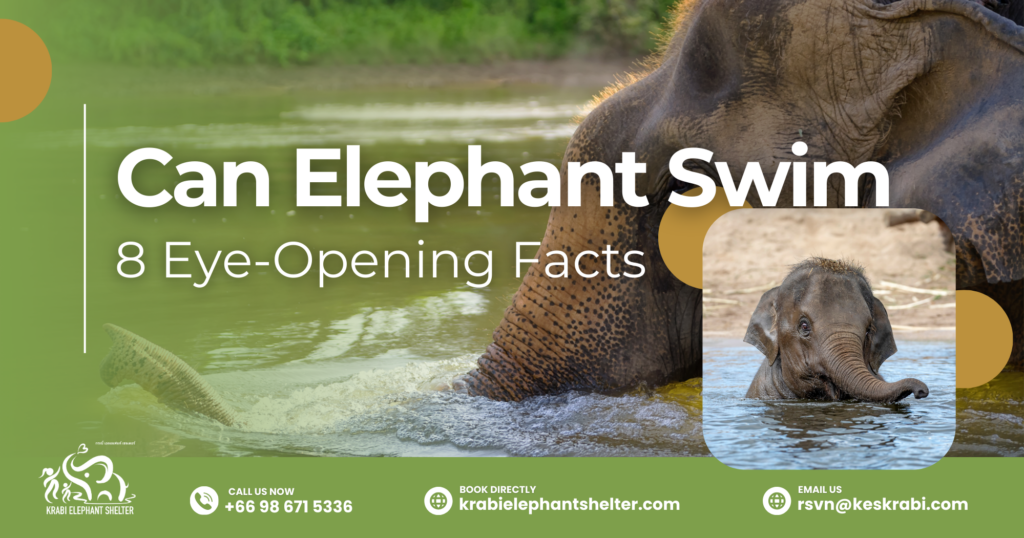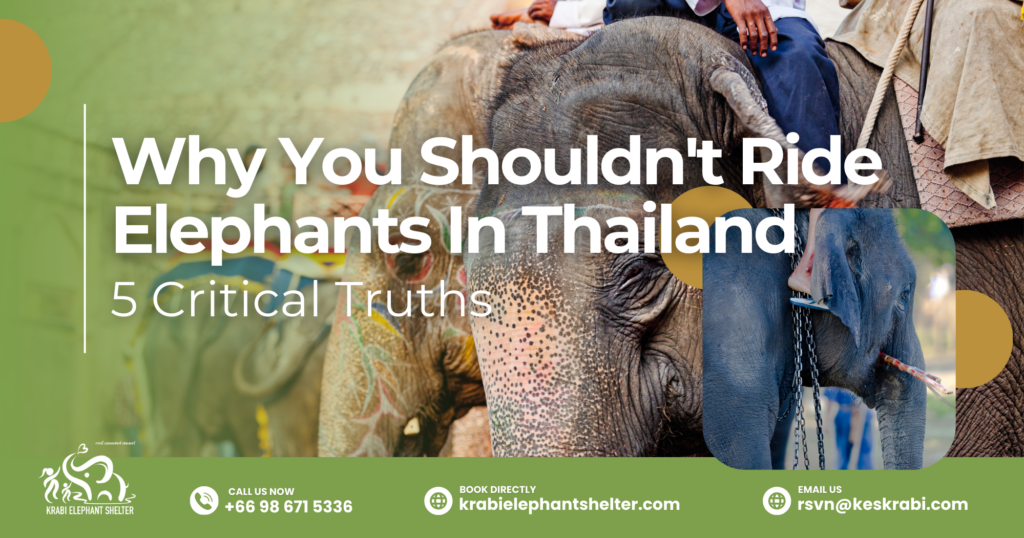
Elephant bathing in Thailand is one of the top wildlife encounters that tourists ask about. Most visitors picture this scene: standing next to a huge friendly elephant, spreading water on its back, and having a great time in a river together. The image has played out on social media so much that elephant bathing is considered a very cute and lovely activity. However, by reading animal welfare topics, travelers have started thinking, “Is elephant bathing really kind to elephants?”
This is a tricky question, and just like with most things, the answer is: it depends. Bathing is not bad for elephants per se, but if certain conditions are not met, it will become one more stressful interaction in their lives. Some programs only focus on making the elephants comfortable and letting them behave naturally, whereas others come up with tourist entertainment ideas that also involve animals. Knowing this helps tourists a lot to be conscious and responsible when they make their decisions.
What Does Elephant Bathing In Thailand Usually Involve?
Elephants go into the water of their own free will in a proper elephant care place. Sometimes they even clean themselves while the visitors just watch them from a distance that doesn’t bother the animals. On the contrary, elephants may be turned into a spectacle for different bath sessions, which are repeated throughout a day in the same place. Such repetition makes the elephants’ natural daily patterns disturbed, and they also suffer stress.
This is why it is the way the event is organized that should be considered, not the event in itself. Bathing, when it is done naturally, has its positive effects on animals. However, when it becomes the main show, then it is definitely a problem.
Why Do Elephants Love Water And Mud?
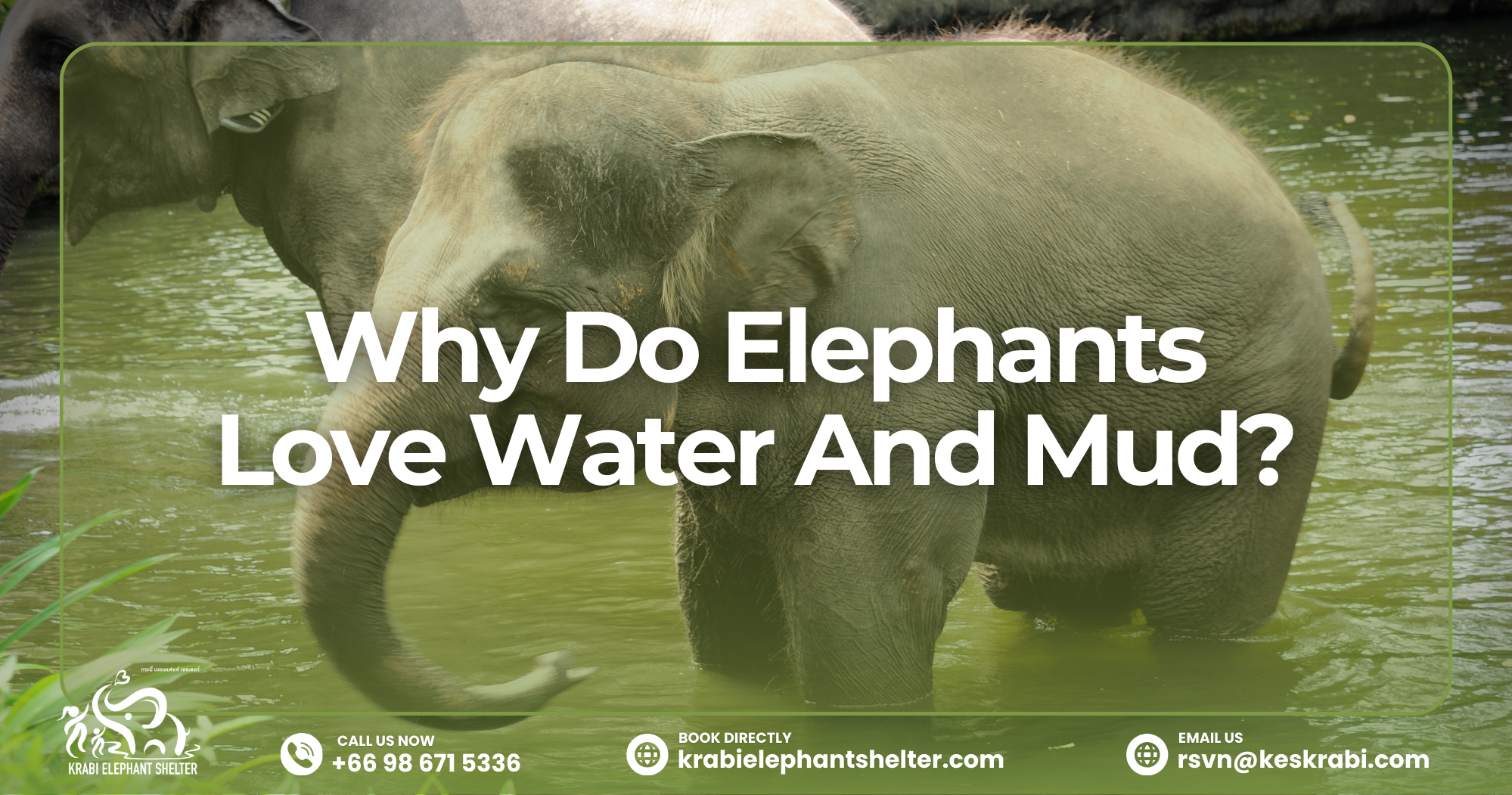
Elephants, being wild animals, just love water. They cool down, have fun, and rest by immersing themselves in a river. Because of their thick skin and very few sweat glands, elephants cannot cool down by sweating like humans. Therefore, water has to serve them as an efficient cooler, especially in tropical climates.
After bathing, they usually cover themselves in mud as well, and this serves four main purposes: a natural sunscreen, a natural insect repellent, a cooling agent by evaporation, and lastly, skin protection. In fact, this behavior is innate, and without a doubt, skin care is a major concern for elephants.
When a sanctuary responsibly repeats the natural cycle, such as bathing, they are ensuring that elephant bathing will be a benefit to the animals’ health. On the contrary, if the elephants are bathed forcibly to accommodate tourist groups’ schedules, their freedom is violated, which in turn causes stress.
The Ethical Debate Around Tourist Interaction
The discussion regarding elephant bathing in Thailand mostly revolves around control and consent issues. Elephants are intelligent and emotionally sensitive creatures. They engage in strong social relationships, and their discomfort can easily be detected through their behavior.
Opponents believe that bathing sessions involving close human contact promote an unnatural human dependency. Though elephants may allow repeated handling, in reality, they experience stress. Moreover, young elephants that are exposed to constant interaction are likely to have behavioral problems.
On the other hand, those in favor argue that limited and respectful bathing can be a safe practice under the supervision of a professional. They point out that elephants in sanctuaries are already living in environments that are controlled by humans. The solution lies in minimizing physical contact and in the removal of forced compliance.
Therefore, the ethical dilemma is more about the issue of power than that of water. Who controls the interaction? Is it the elephant or the tourist schedule?
Signs Of Ethical Elephant Bathing Experiences
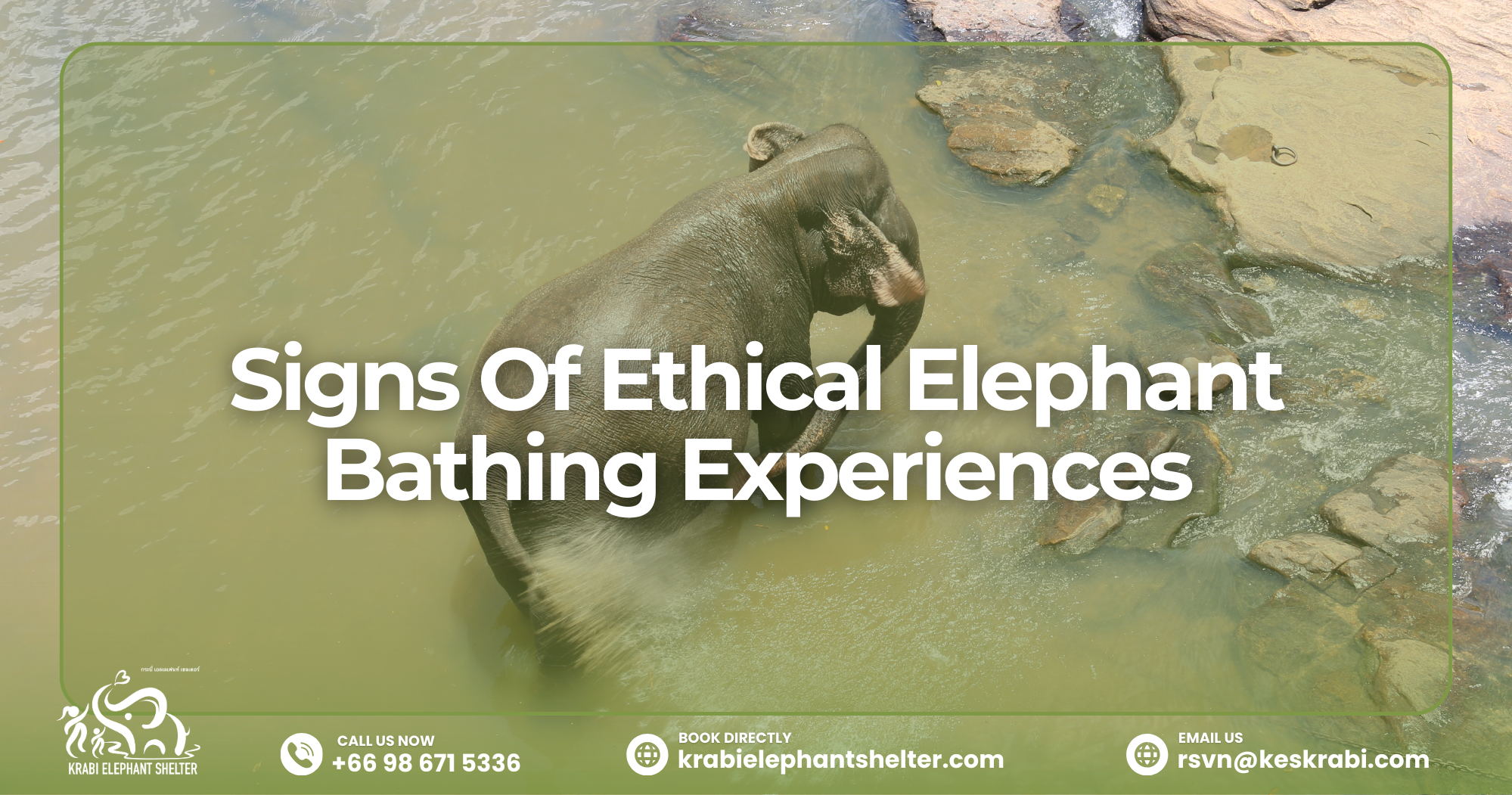
Tourists can make a judgment about elephant bathing programs through certain signs. Identify the type of sanctuaries that do not utilize hooks, chains, or shout commands in the course of a bathing session. Find out whether the elephants are allowed to come to the water on their own.
Another good sign would be limiting the duration of human interaction. Engagements that consist of direct touching are kept to a minimum, and the visitors are given more time to watch the elephants. These are the kind of sanctuaries that really care about welfare. In most cases, transparent operations and the availability of clear welfare policies are the hallmarks of responsible management.
What To Stay Away From
Several elephant bathing programs are run more like attractions than sanctuaries. Big crowds, strict bathing schedules, and nonstop photo ops are often the features serving the commercial interests.
Be on the lookout for signs of a repetitive routine. If elephants are made to bathe a few times a day, then their rest will hardly be sufficient. Places that market elephant bathing as a “must-see” entertainment rather than a “may-see” behavior are probably not ethical.
It makes a huge difference whether the marketing language is in line with the actual ethical work or not. A genuine sanctuary is more about rescue, rehabilitation, and natural living. An attraction, on the other hand, that is focused on selfies and guaranteed interactions could be overlooking the welfare issues.
How Responsible Sanctuaries Organize Bathing Activities Of Elephants
Responsible sanctuaries organize bathing activities along the natural rhythm of the elephant. They decide when to enter the water. Visitors watch, and if the elephants are calm and show voluntary behavior, they can also join in.
Nowadays, many sanctuaries convert bathing from a hands-on activity into guided observation. Visitors watch the natural bathing of the elephants while the caretakers demonstrate their habits. Such a method makes the animals less stressed, and at the same time, it can still be quite educational.
A few other ethical programs replace river bathing with spa mud sessions. During these sessions, elephants are rolling and covering themselves in the mud, and the visitors may just watch or help them very lightly with permission. Such occasions harmonize with natural behavior to a greater extent than choreographed bathing lines.
Is Bathing Elephants In Thailand Ethical?
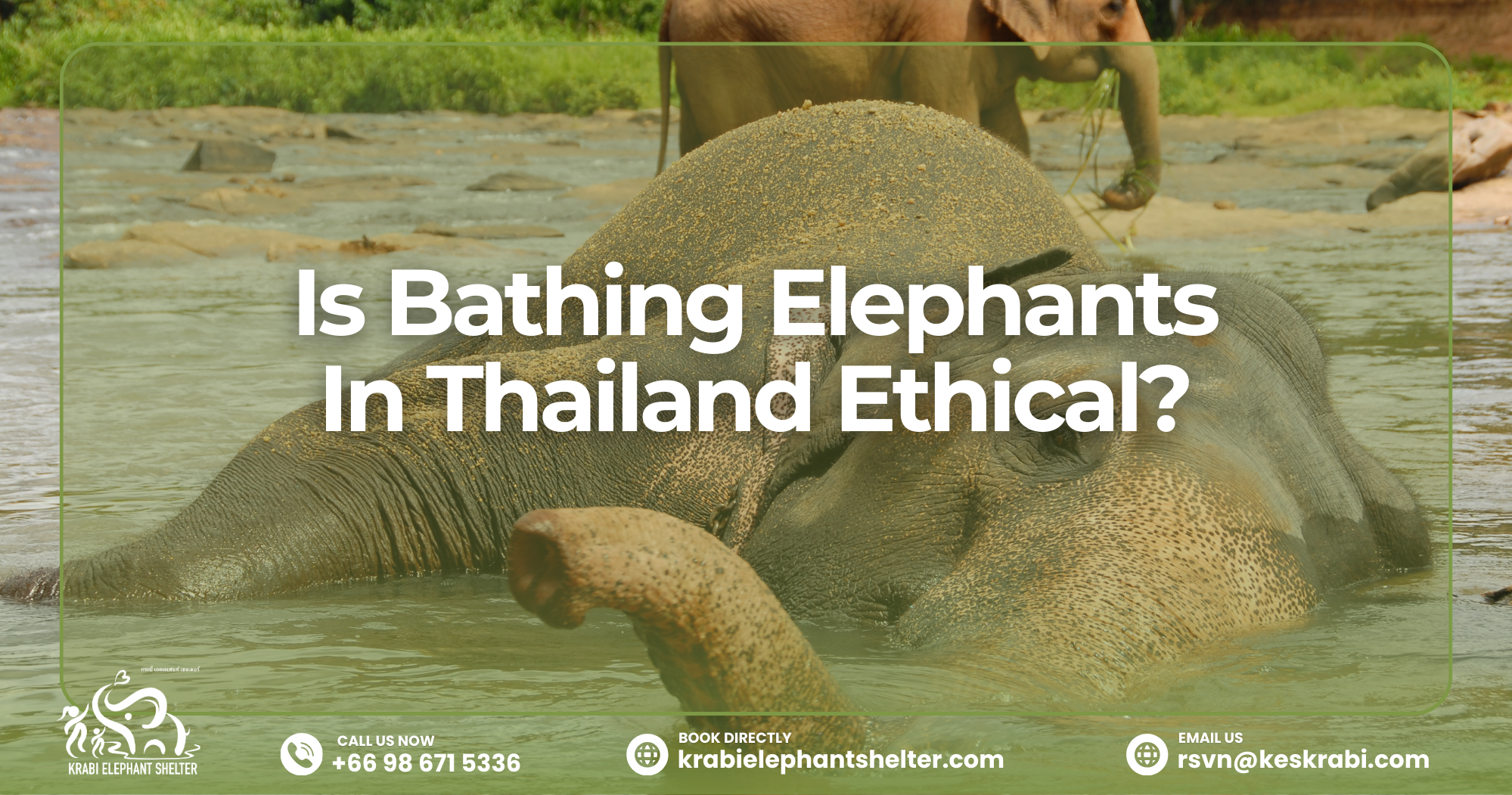
Bathing elephants in Thailand can still be considered ethical under the most stringent requirements. The activity must be their choice, it must be minimal in extent, and it must be respectful. Neither the use of force, nor the locking up of the animal, nor repeated handling for the purpose of entertainment should ever be the case.
The ethical nature also has to be determined by the sanctuary practices on a broader scale. Does the facility completely ban riding and performances? Does it provide large enough enclosures and veterinary care? The single act of bathing does not determine ethical status. It is just one piece of the whole welfare framework.
In the end, ethical elephant bathing really elevates the animal’s comfort level in comparison with that of the tourist. When the decisions are welfare-driven, bathing is one kind of enrichment instead of exploitation.
Alternatives To Gentle Bathing Close-Up
The visitors that are unconvinced with the idea of close-up contact may decide on the alternative programs based on observation only. This way, they can walk with the elephants in a manner that is barely noticeable at a considerable distance, and at the same time, they get to see the animals carrying out their natural behaviors without being disturbed.
Another simple alternative to physical contact is feeding. Provided that the feeding is controlled, supervised, and accountable, it does not cause much impact. While the visitors are feeding the animals with food approved by the caretakers, they can also learn about the nutritional requirements and health management. Additionally, educational tours and conservation workshops aim to increase knowledge without physical contact.
Why Is Education Important In Elephant Tourism?
Ethical elephant sanctuaries are ones that use bathing sessions for the purpose of educating their visitors. The educational guides can give a briefing on the history of the elephants’ use for logging and tourism. They can talk about the shift of modern-day sanctuaries toward rescue and rehabilitation.
Acknowledging this, it helps the visitors to see elephant welfare as a very complex issue. Thailand has a population of thousands of elephants in captivity; many of them are elephants that have been previously exploited for entertainment or used as working animals. In order to address the issue, the sanctuaries have been made safer and quite natural, too.
When tourists emphasize learning more rather than just seeing spectacle, they are actually making a move to help long-term conservation. Tourism that is well informed creates new rules for the industry and motivates it in a way that the improvements will be everlasting.
Tips For Making Responsible Travel Choices
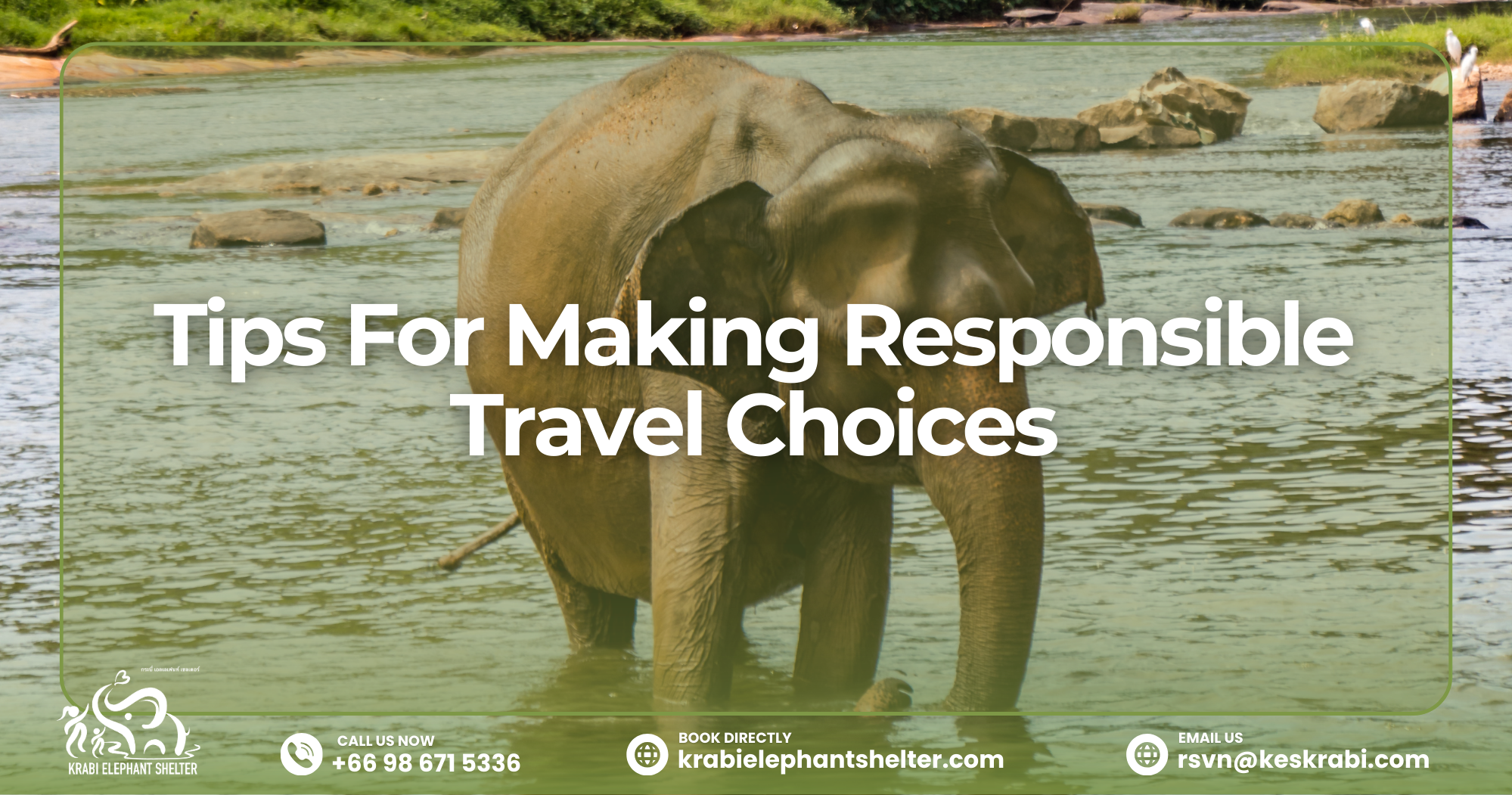
Selecting ethical elephant bathing activities in Thailand requires the visitor to be not only well-informed but also very critical of whatever information they get. Check out the independent reviews, go through the policies of the sanctuary, and ascertain the level of transparency on the subject of animal care. Forego those facilities that at no time brag about the guaranteed close contact with no restriction.
You can ask questions even before you make the booking. How many hours in a day does the elephant have for bathing? Do the animals get the days off? In case the animals can be handled only when they want to, do they have the freedom of choice? Only an operator who will be ethical knows how to give a clear, firm answer to these questions.
By means of responsible tourism, the welfare of both elephants and travelers is thus ensured. Visitors, on their part, help to raise the standards step by step by selecting wisely.