Elephants are a very important part of Thailand’s story, culture, and character. Meeting these majestic creatures is often the most memorable part for most tourists. And yet, elephant tourism in Thailand is really a complicated issue. Behind the beautiful pictures and memorable experiences, the question can be raised: Is it ethical to have such close interactions with them?
It is essential to learn the difference between exploitative camps and real sanctuaries. Making the right decisions will save the elephants from being hurt, and at the same time, visitors will be able to have a wonderful experience with the animals. This article gives an insight into the elephant tourism industry in Thailand, shows you how to spot an ethical experience, and also outlines what you need to know before you go.
The History Behind Elephant Tourism In Thailand
Throughout the ages, elephants were an integral part of the Thai way of life. They served as weapons of war, festive parade attractions, and, most importantly, the timber industry. However, when Thailand prohibited commercial logging in 1989, it left thousands of domesticated elephants and their mahouts (caretakers) without their main source of livelihood.
Tourism turned out to be the next best thing. Elephant camps dotted the landscape, providing rides, shows, and various interactive activities to entice visitors. While tourism provided these camps with the necessary income, it also led to the emergence of practices now deemed unethical. Some camps started putting the welfare of elephants secondary to the entertainment factor, which eventually ignited the worldwide controversy over elephant tourism in Thailand.
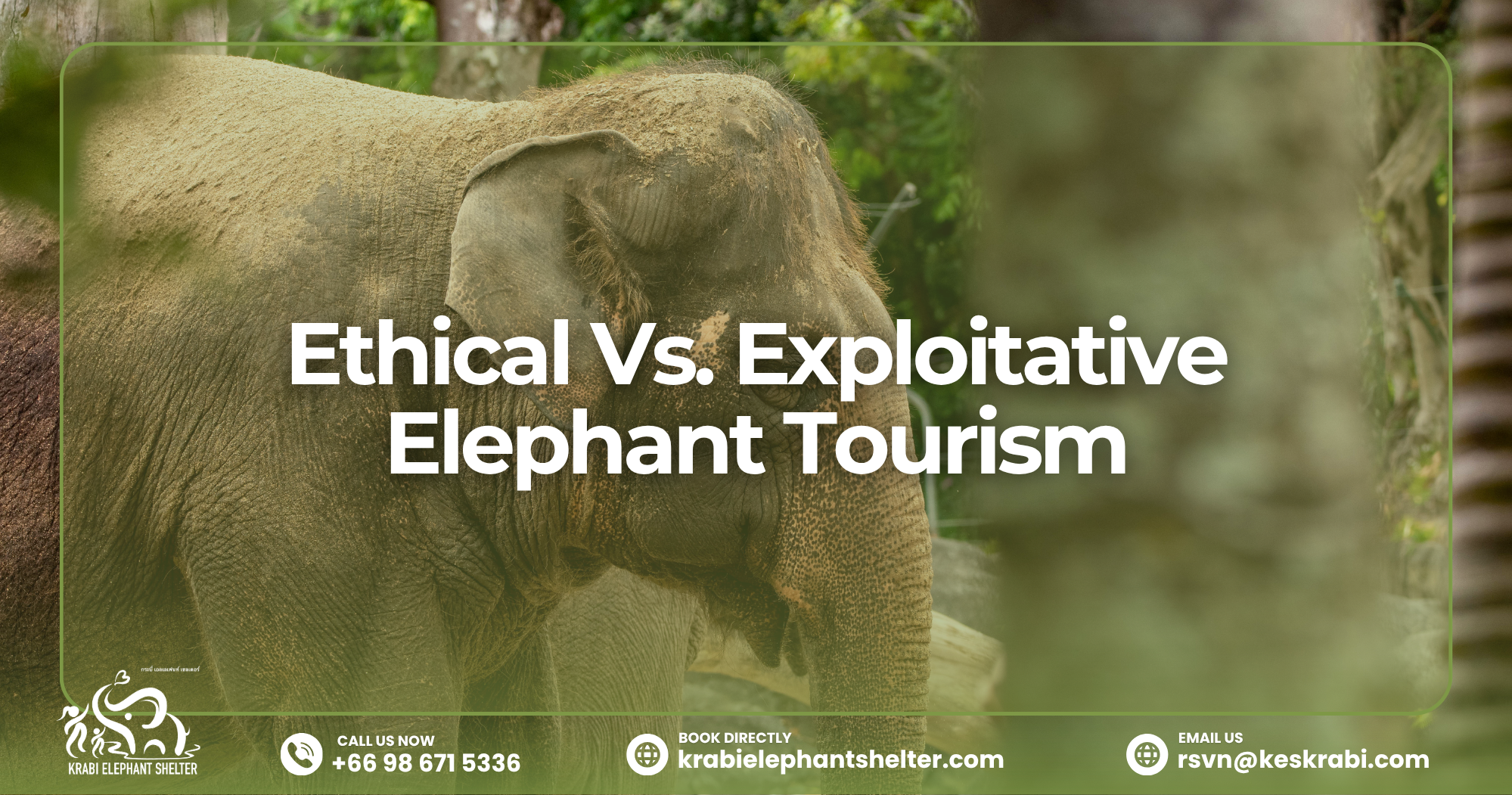
Ethical Vs. Exploitative Elephant Tourism
Exploitative Elephant Camps: What To Know
It is a misconception to think that all elephant experiences are ethical. Some camps are so set on flaunting their profits that they do not care about the welfare of their elephants.
Some of the most common signs of exploitation include:
- heavy-saddled elephant rides
- circus-type performances
- elephants painting or performing tricks
- constant chaining with restricted movement
- huge crowds with little or no management
Teaching elephants how to perform or ride can sometimes be quite brutal, especially when the training is just starting. Constant riding can also damage the elephant’s spine and joints. Such practices, at the same time, ignore natural behavior and the animal’s need for rest and comfort merely to delight humans. Human presence may not see to it that visible harm is done, but the secret ways in which the animal is trained are usually not very humane. Knowing this can help tourists make decisions that will not perpetuate such a system.
True Elephant Sanctuaries: A Different Angle
Ethical elephant sanctuaries outline their main activities around rescue, rehabilitation, and giving the elephant an environment that closely resembles its natural habitat.
Typically, sanctuaries:
- Do not allow elephant rides
- Do not let elephants perform
- Offer big, open natural spaces
- Maintain low visitor numbers
- Emphasize educating
Elephants are allowed to forget their old ways slowly as they simply take on the natural elephant carefree and fun life: feeding, bathing, interacting, and resting whenever they want.
In addition, some rescue centers, besides rehabilitating elephants, also take care of those that were used for logging, street begging, or entertainment before their rescue. Even if the elephant’s mahout is still with the animal, it essentially is a relationship based on care rather than control.
Occasionally, guests have the opportunity to watch the feeding time and food preparation closely or simply enjoy the sight of the elephant wallowing in the mud. The focus is more on understanding and valuing the animal rather than on entertainment.
How To Choose Responsible Elephant Tourism In Thailand
It is necessary to do some research and be aware when selecting a good experience. One should follow the steps below before making a booking:
1. Review The Camp’s Website Carefully
One should not only look for statements about no riding and no performances, but also, the mission of the ethical operators should have gone into great detail about their animal care practices.
2. Read Independent Reviews
Customer reviews for a facility can be quite revealing of the overall quality of the animal environment and the educational aspect of the program. One should focus on detecting whether the elephants have ample living space and if the visitors can learn something about the elephants by means of the educational programs.
3. Ask Direct Questions
If you need more information, don’t hesitate to contact the elephant sanctuary. Inquire about the elephant riding policy, the number of people in the groups, and the daily schedule of the elephants.
4. Observe Upon Arrival
Look out for the elephants’ behavior and appearance. They should be able to roam freely, naturally interact with each other, and not be constantly restrained for their health.
Responsible elephant tourism in Thailand heavily relies on the decisions of informed travelers.
The Role Of Mahouts In Modern Tourism
Traditionally, mahouts have been living with elephants for their whole lives. In ethical establishments, mahouts remain a key element in continually checking the health of elephants, leading them safely, and giving them care on a regular basis.
On the other hand, in abusive places, mahouts are often forced to use their elephants for shows or rides. By means of supporting the right kind of sanctuaries where both elephants and mahouts are treated well, one is assured that the cultural practices change in the right way.
Preparing For An Ethical Elephant Visit
In case you choose to see elephants in a sanctuary, a bit of preparation will make your visit more comfortable and the sanctuaries happy with your respect for nature.
What To Wear
Opt for light and airy clothing that can match the heat yet is durable enough for the outdoors. Insect-proof and protective of your legs, long pants will come in handy. Wearing closed-toe shoes or sporty sandals with a sturdy sole is a good idea.
Bring Eco-Friendly Essentials
- Refillable water bottle
- Sunscreen without harmful chemicals and packaging
- Natural insect repellent
- Sun hat and glasses
It is best not to bring plastic garbage into the wild.
Follow Sanctuary Guidelines
- Always heed the directions of the personnel.
- Do not make loud noises, run, or try to pet the elephants without first getting consent.
- Observing the limits not only keeps the animals safe but also the visitors.
Is Elephant Tourism In Thailand Ethical?
It wholly depends on what type of experience you choose. Camps that focus on exploiting animals only worsen the already existing welfare issues. While ethical elephant sanctuaries can be a good way to run rescue and rehabilitation, as well as to enhance the elephants’ situations.
Tourism is not, by itself, a damaging factor. Indeed, it is through efficient management that tourists’ payments can be used to provide veterinary services, extend habitats, and raise awareness. The point is to redirect people’s choices towards kind-hearted ones. Once there are a lot of tourists who want to come face-to-face with animals ethically, the whole industry will change step by step.
The Future Of Elephant Tourism In Thailand
Over the last ten years, people have become more aware of the plight of elephants. More and more elephant camps have ceased to offer riding and shows and have instead gone for the sanctuary-style models. Changes internationally in the way people look at animals, the awareness of animal rights, and the education of travelers about the impact of tourism on local communities and nature, especially at the global level, have been major factors in the change of the pattern.
However, the industry will eventually undergo a complete transformation. The threat of the takeover of the industry by the unscrupulous, the dependence on tourism, which is highly seasonal, and the lack of the right information are some of the challenges that the industry faces.
When visitors select authentic elephant sanctuaries, they therefore become catalysts for positive change and also help set the pace for further advancements in the standard of elephant care.