Elephants are one of the most fascinating animals on earth. They are smart and caring, and their size alone is just amazing. However, of all the things about them, their sleep is probably the one that is least discussed. People keep wondering: How do elephants sleep? Do they lie down or stand? How long are they asleep? Do elephants dream as we do?
Knowing the elephants’ sleeping habits is only the beginning. It reveals their physiology and behavior, as well as their ecology and social structure. Unlike other big mammals, elephants have unique sleeping patterns that result from their survival instinct, the necessity of food, and their complex brains.
How Many Hours Do Elephants Sleep?
In fact, one of the things about elephants that is most surprising is the length of their sleep, which is quite short. While an average human should sleep for around seven to eight hours, elephants in the wild sleep only for about two to four hours a day.
Most of the time, the African elephants are found to be at the lower end of the two-hour sleep, thus making them the shortest-sleeping mammals alive today.
Why Would It Be Necessary To Sleep So Little?
The lifestyle is largely responsible for it. The elephant’s day is mostly occupied with feeding. To give you an example, a fully grown elephant can eat up to 300 pounds of plant materials within a day; thus, long journeys for food and feeding take almost the whole day, leaving very little room for rest. In contrast to predators, elephants cannot have a single big meal and then be done with it; rather, they have to keep feeding themselves if they want to meet their energy requirements.
Besides that, the question of safety is another reason to think about it. Though the elephant may be a massive and formidable animal, it is not without dangers, particularly for the young ones. For instance, a herd of elephants may decide to be on the alert during the night hours, and thus, they sleep only for short and light periods to be able to perceive threats quickly.
Do Elephants Sleep Standing Up Or Lying Down?
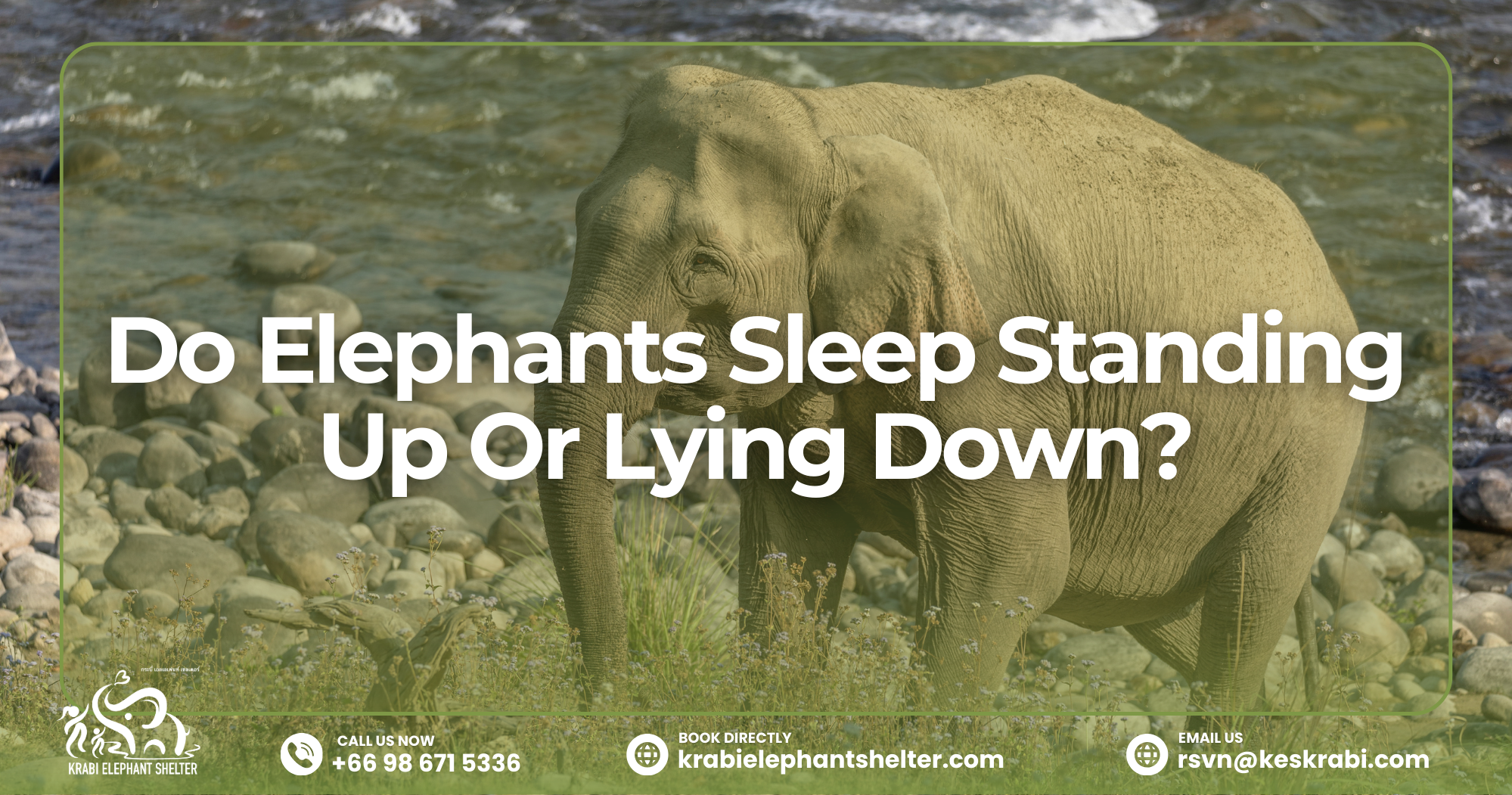
Elephants can sleep using both their positions, that is, lying down or standing up. However, the functions of the two different things are varied.
Standing Sleep
When an elephant is in non-REM sleep, a lighter stage of its sleep cycle, it is found that they decide to spend most of the time standing asleep. While standing, they keep themselves semi-alert by making minute movements of their body and locking certain muscles. With this position, they can easily wake up and run if safety is threatened—a survival skill that is most likely inherited from their ancestors living in the wild.
Lying Down To Sleep
The deepest and most revitalizing part of sleep, known as REM sleep, is only possible when an elephant falls to the ground. The phase of sleep associated with dreams, REM sleep, demands total muscle relaxation, a condition that can never be met by a standing posture.
But the fact remains that elephants are not very keen on lying down. There are quite a few that would simply stay down for only a few minutes every night, and some others who would only lie down for a few hours in 2 or 3 days to get their REM sleep. Besides, it is a well-known fact that lying down too long can be dangerous for the lungs and other organs due to the enormous weight of the body, so the time of the sessions remains limited but still very important.
Infant elephants are like human babies in that they lie down a lot and sleep for long periods sometimes. This is because their bodies are light, and they need more REM sleep for brain development, similar to human infants.
Elephant Sleeping Positions: What They Reveal
Elephants, when reclining their bodies, employ several particular positions:
Side-Lying Position
This is the typical deep sleeping pose. An elephant extends its body and places its trunk either down on the ground or across its face.
Semi-Prone Position
Occasionally, elephants may be found on their sternum with legs folded under—just like a huge version of a dog that is sleeping. The posture gives them partial rest and is mostly done for short naps.
Support Against Trees Or Slopes
By putting their weight on a mound, a tree, or even another elephant, the elephants rid themselves of the pressure in their legs while still standing. This shows the extent of their social nature during sleep.
The trunk is the one body part that is still going even after they decide to rest. Elephants may swing it, jerk it, or curl it—quiet indications of light dreaming or muscle relaxation.
Do Elephants Dream? Understanding Elephant REM Sleep

By all means, elephants go through REM sleep and thus have a chance of dreaming. Still, because REM is only a tiny fraction of their total sleep, the occurrence of their dreams is much lower than in most other mammals.
In most cases, REM sleep in elephants is very short, only a few minutes. This sleep stage is, however, always significant since the REM period is associated with memory consolidation, emotional processing, and learning—activities that completely fit the model of elephants’ extreme brainpower and their strong social interdependence.
While we cannot precisely know the content of elephant dreams, researchers think that these could be related to social interactions, environmental awareness, and memories, just like the dream topics in other highly intelligent animals such as primates and dolphins.
Why Elephants Sleep So Little
The first few reasons, biologically and behaviorally, explain their short sleep cycles.
Constant Feeding Needs
Big bodies need a lot of food, and eating can get quite lengthy. At the same time, their digestive system stays almost fully active.
Vigilance Against Predators
While adult elephants only have very few enemies, the young ones are fragile. That is why the herd must be on guard all the time.
Memory And Intelligence
The brain of an elephant is big and complicated, just like that of a human; however, it processes the experiences only when the elephant is awake. Interestingly, unlike humans, the elephants do not require long REM sleep to be able to remember; maybe that is because they constantly relearn through interaction with others.
Migration And Travel
There are days when herds march for miles, and sleep has to be taken from the time they have left for rest.
Sleep Flexibility
Elephants are biologically programmed to operate on very little sleep; thus, they are very efficient and strong, even in tough situations.
The Secret World Of Elephant Sleep
Which way do elephants sleep? The solution is both straightforward and significant. An elephant sleeps less than almost any other mammal; thus, it can sleep for short periods of a few minutes while standing and only for a very short time lying down in deep sleep (REM).
They do dream and change their position while resting. They keep each other informed about the surrounding situation. Elephants can also adjust their sleeping habits to live in different kinds of forests.
Their sleep is not only a physiological one—it mirrors their intellect, their social relationships, and the problems they encounter every day. Knowing how elephants sleep makes us realize how great these lovable giants really are.
Make your reservation for the Krabi Elephant Shelter right away!
When you go to Krabi Elephant Shelter, the money you pay to get in goes directly to taking care of the elephants, including their food, medical care, and keeping their home clean. You can make your trip worthwhile by helping to protect animals in the long term. At the same time, enjoy a once‑in‑a‑lifetime experience with Thailand’s most famous giants.
Call us at (+66) 98 671 5336 or email us at [email protected]
You can book directly at krabielephantshelter.com