We all know that dental care is important, which is why people spend a lot of time and money every year to take proper care of their teeth’s health. Dental care is just as important for animals, however, if not more so, given how few options there are for them, should something go wrong with the teeth of elephants or their health.
And, as anyone who has dogs, cats, or other pets at home knows, monitoring and maintaining an animal’s dental health can be very challenging. Animals rarely share their physical pains with us and are not often “cooperative” when we try to help take care of their dental maintenance.
And, as you would imagine, taking care of the teeth of elephants are even more challenging than taking care of a dog’s teeth. So, how do elephant sanctuaries care for the elephant’s teeth? Here is a quick walkthrough of this fascinating topic and process.
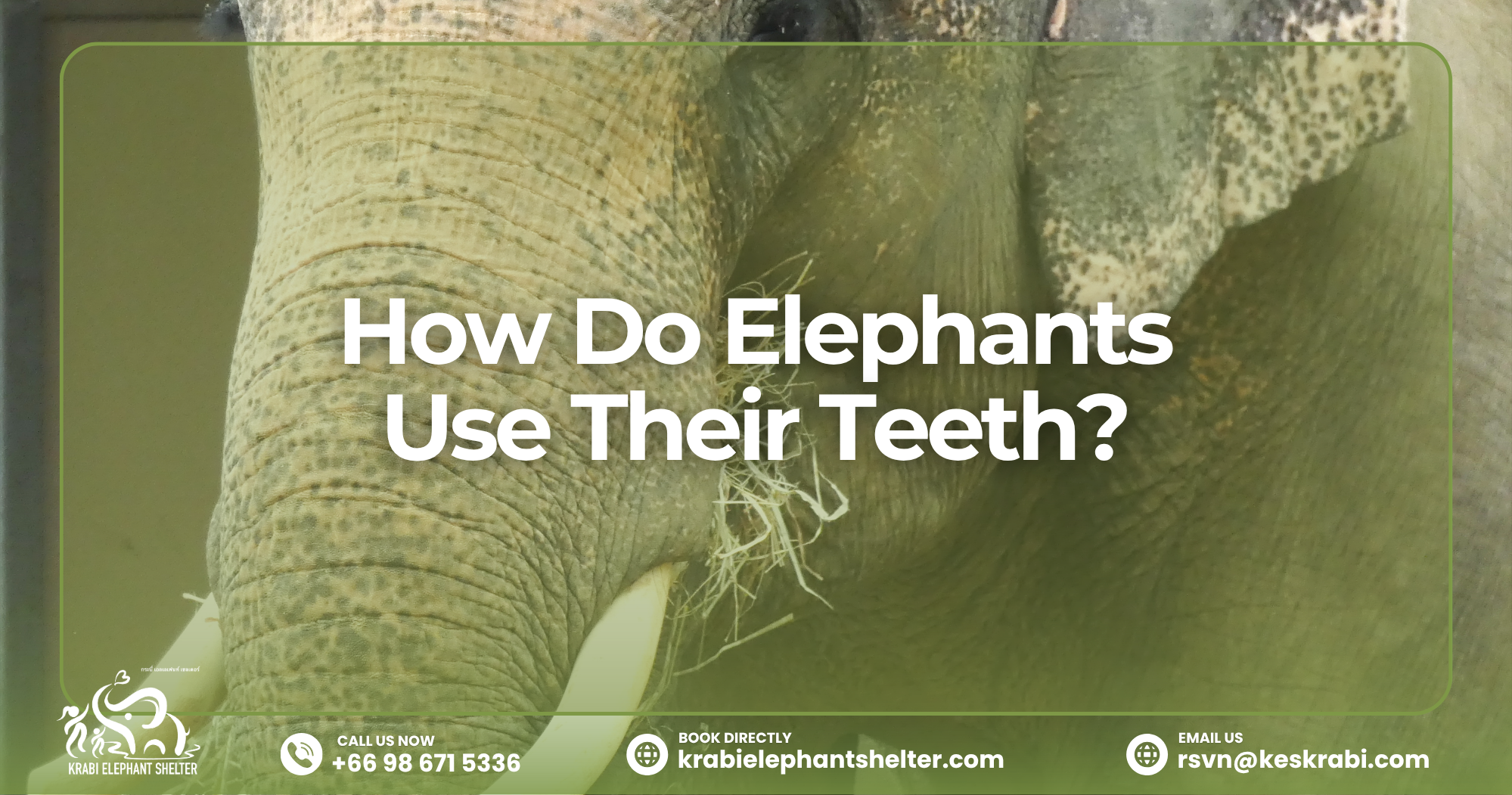
How Do Elephants Use Their Teeth?
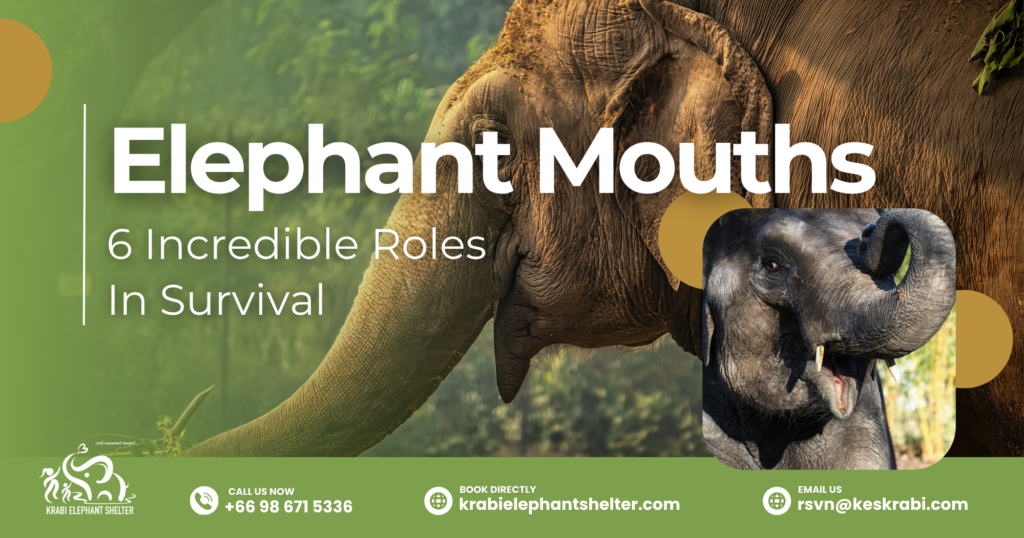
As herbivores, teeth of elephants are specialized for chewing vegetation. So, they don’t have any canines, but they do have three premolars and three molars on each of the four sides of their mouths. These 24 large, flat teeth in total are excellent for chewing anything from grass and leaves to bark, branches, roots, and fruits.
Of course, there is also the “elephant” in the room – their tusks. Elephants’ tusks are actually their incisor teeth. Every elephant has only two such incisors, both coming from the upper part of their mouths, not from their lower jaw, as people often mistakenly believe.
Why Are Female Elephant Tusks Hard To See?
These incisors are usually longer for male elephants than they are for females. This is especially true for Asian elephants, where females’ incisors are so short, people often think that females do not have tusks at all.
This is not exactly the case, however. Instead, the incisors of female Asian elephants are much shorter than those of African female elephants or of their male counterparts, and they often don’t come out from under their upper lips.
So, it’s not so much that female Asian elephants don’t have tusks, it’s more that they are so short, they are difficult to see. That being said, such “short tusks” are also called tushes to differentiate them from the standard, long tusks.
From that point of view, it can be said that both African and Asian male elephants (and most African female elephants) usually have tusks, and Asian female elephants have tushes.
Why Are Some Elephants Born Without Tusks?
It should also be noted that there are some elephants – both African and Asian, and both male and female – that are born with no tusks, tushes, or incisor teeth whatsoever. Furthermore, the number of such tusk-less elephants seems to be growing, at least in the wild.
The evolutionary reason behind this trend, according to scientists, is that the ivory hunting and trade (as well as sports hunting) have killed too many elephants with tusks, but tend to spare the few that do not have any tusks.
As a result, tusk-less elephants reproduce more and more often, and become more common in the broader wild elephant gene pool. Such tusk-less elephants are often called “makhna.”
What Are Tusks Used For?
What are these tusks used for, however? While the role of premolars and molars is obvious and is pretty much the same as for other herbivores and omnivores (including us), tusks are relatively unique in the animal kingdom. Elephants are not the only animals with tusks, but they are some of the few that do.
Similar to wild boars and other animals with tusks, elephants use their elongated incisors for various purposes – for defense, for displaying dominance when threatened or when competing for mates, for foraging, for stripping bark off trees, for digging, and sometimes even as tools, when they want to lift or move something.
What Is A Dominant Tusk?
It’s also worth mentioning that, similar to how humans have a “dominant hand,” elephants tend to have a “dominant tusk,” i.e., a tusk they prefer to use for tasks that necessitate only one tusk, such as digging.
Naturally, this dominant tusk usually sees much more wear and tear over the years, compared to its less dominant counterpart. That’s why it’s usually easy to tell which is the dominant tusk of a given elephant, especially if it’s of age – it’s the shorter one, because it has been worn out more over the years.
Teeth Of Elephants: How Sanctuaries Provide Dental Care
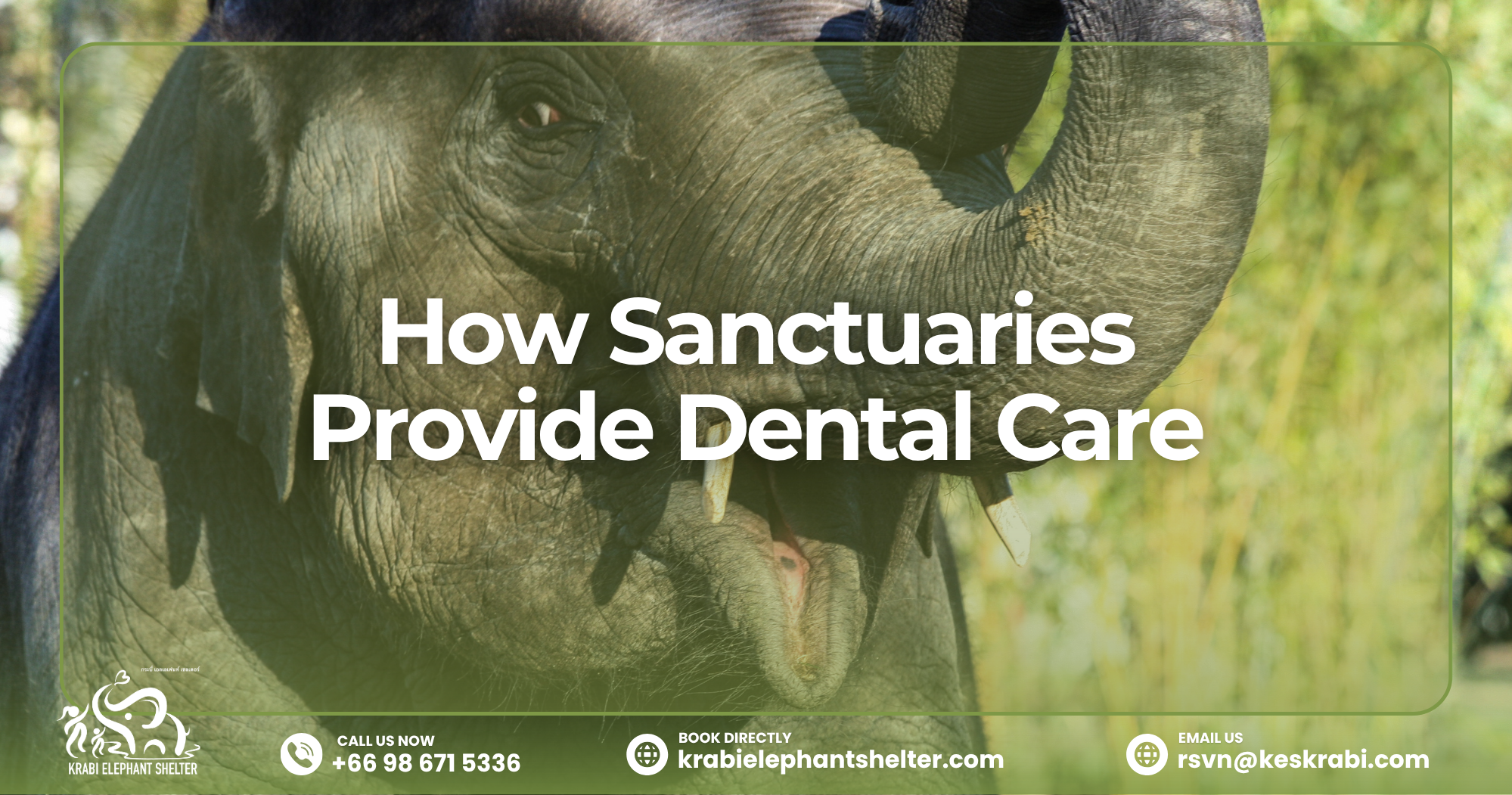
As with human teeth, properly taking care of the elephant’s teeth takes a lot of care and a somewhat customizable approach. This is to say that every elephant has different teeth, different tusk growth patterns, and many elephants develop different dental problems as they age.
So, there usually isn’t a one-size-fits-all approach for elephant dental care. Instead, elephants’ mahouts or carers in ethical shelters and sanctuaries take extra time and care to regularly inspect the teeth of every elephant in their care.
How Mahouts Help With Elephant Dental Health
Fortunately, elephants are intelligent and social animals, and – when they know and have grown up with the people that care for them – routine dental inspections and monitoring can be done with no need for sedation.
In fact, properly socialized elephants will usually also allow their mahouts to clean their teeth manually with no need for sedation, too – if the domesticated elephant knows and trusts their human caregiver, regular teeth cleanings are usually easy to do.
When Elephants Need Major Dental Work?
However, major dental work, such as cavity fillings or treating rotten teeth, always requires sedation or full tranquilization, simply because elephants are far too large and dangerous for humans to safely do dentistry around them. The same goes for major tusk procedures, such as trimming tusks’ tips or capping them with bangles for protection.
Where To See Ethical Elephant Care In Action
There are thousands of zoos, parks, sanctuaries, and other places in both Asia and Africa that keep elephants, take care of them in one form or another, and use them either for work or for tourism. Unfortunately, most such places are far from “ethical” by any stretch of this term.
In fact, unethical elephant tourism is rather prevalent, and most of the places you can visit to see elephants in person are unfortunately rather unethical in the way they treat their animals. Fortunately, there are some exceptions.
Why Krabi Elephant Shelter Stands Out
For example, if you’re visiting Thailand, a must-see elephant sanctuary is the Krabi Elephant Shelter. A second home for many elephants and a great place for tourists to experience meaningful and hands-on interactions with elephants, the Krabi Elephant Sanctuary is ACES-certified (Asian Captive Elephants Standard) It is only the second elephant sanctuary to match this standard in all of Krabi, Thailand.
The shelter offers a wide range of interactive activities, such as walk-in tours, elephant feedings, and more. Moreover, unlike other elephant tourist attractions that offer hands-on experiences, the Krabi Elephant Shelter does so in an ethical way that’s safe and healthy for both the elephants and their visitors.
This is to say that there are no harsh “socialization” trainings for the elephants. Instead, the animals in this shelter are always well taken care of. And, yes, that includes excellent teeth maintenance.
Book your trip to Krabi Elephant Shelter now!
By visiting Krabi Elephant Shelter, your entrance fee directly supports the elephants’ care, including their food, medical treatment, and habitat upkeep. It’s a meaningful way to make your trip count—contributing to long-term animal protection efforts while enjoying a once-in-a-lifetime encounter with Thailand’s most beloved giants.
Phone: (+66) 98 671 5336
Email: [email protected]
Book directly at krabielephantshelter.com