Thailand has chosen the elephant as its national animal. The elephant has been a highly respected animal both symbolically and practically for the Thai people throughout their history, culture, and nature. Elephants have been the major influencers of Thailand’s landscape, way of life, and customs for many centuries.
However, in the present day, they symbolize not only the responsibility of taking care of them but also conservation and the idea of ethical tourism. This implies that it’s impossible to fully grasp the Thai national symbol without considering its history and its modern existence.
Here at Krabi Elephant Shelter, you can almost feel this connection. It’s like seeing how the whole relationship has changed—exploitation turned to respect, and control to care. The elephant’s role as Thailand’s national animal has been given a contemporary meaning through the values of protection and survival with dignity.
Why Elephants Became Thai National Animals
The main reason behind elephants becoming the country’s national animal was due to their great historical contributions, not just their beauty. For a long time, the elephant has helped humans in various aspects such as transportation, farming, and defense.
Thai kings used to ride elephants when they were going to war and also during royal ceremonies. It is through these unbelievably majestic white elephants that the royal family would get their special status, and their reign would be seen as flourishing and prosperous.
Furthermore, elephants played a crucial role in propelling the rural economies. It was through the elephant’s work that the logging industry, in particular, took root deeply in nature. Such a long and intimate partnership between these two species has made it impossible to separate elephants and Thailand from each other. Thus, the elephant is now a national symbol of both physical strength and mental acuity, not just a work animal.
With that said, Thailand in the 21st century has mostly replaced elephants with machines in the areas of agriculture and domestic work. The elephant is currently a national one with the connotation of the moral rather than the material side of the story.
Spiritual And Cultural Significance Of Elephants In Thailand
From the Thai perspective, elephants are more than mere animals; they are divine beings. Many temples have images of elephants that stand for qualities such as wisdom, patience, and stability. As a matter of fact, religious ceremonies sometimes serve as occasions to pay homage to elephants not only as divinely blessed creatures but also as actors in the nature show of life.
The artworks of the past feature elephants in close association with kings and monks. These pieces of art demonstrate the equilibrium between might and tenderness. According to Buddhism, patience and gentleness go hand in hand, and this is illustrated perfectly through the elephant’s peacefulness and the fact that it has meditated on itself.
Nevertheless, the great respect they show to elephants in their culture is in stark contrast with the idea of using these magnificent creatures for their entertainment purposes in the past. Nowadays, the focus of the ethical sanctuaries is on the recovery of the true spirit and the dignified nature of the elephant through returning to the original values that the culture actually has.
Wild And Captive Elephants In Thailand
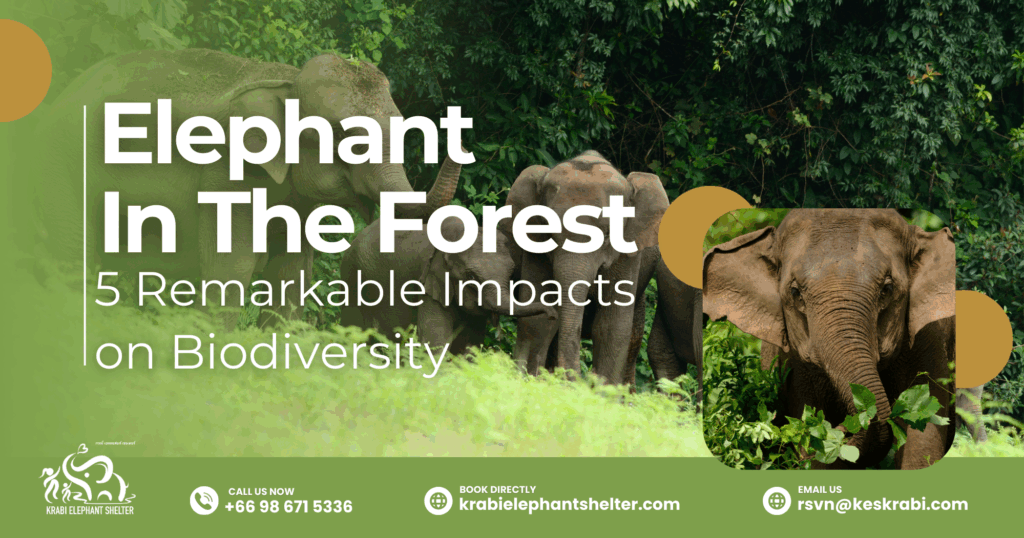
Elephants kindly allow humans to coexist with both their wild and captive forms in Thailand, albeit in very different ways. Wild elephants can only be found in the forests and national parks. These areas are their natural habitats. They help in maintaining nature in these places by spreading seeds, clearing the understory, creating canopy gaps, and generally keeping the forests healthy.
On the other hand, captive elephants were and are mainly used in the gigantic hands of laborers’ logging industries or for entertainment and works of tourism. One can easily find instances when these elephants were kept in isolation, deliberately chained, and made to perform tricks like in circuses. These kinds of environments and lifestyles cause the elephants to lose many of their natural, normal behaviors and social relations.
Today, places of kindness try to cut the difference between these two situations. At Krabi Elephant Shelter, the elephants that were once part of a harsh world are now going back to nature, as close as possible in the given conditions. They eat, play with other elephants, and use the space they get naturally. The main thing they are focusing on here is the elephant’s well-being and healing over the need to show off animals for the guests.
Why Elephant Conservation Matters Today
Elephants are still in danger even though they have national-level protection. The loss of their natural habitat is still their biggest threat. As a result of the expansion of agricultural lands and the construction of infrastructure, forest corridors get narrower. Consequently, there are more cases of conflicts between humans and elephants.
The killing of the animals for their tusks goes on as well. The driving force for this is the demand for ivory. Though it is against the law, there are still a lot of areas where it is difficult to enforce the law. Elephants that are kept in captivity suffer from being left to themselves if the tourism industry shrinks or if unethical operators shut down.
Elephant sanctuaries are of great help. They are a place where they can provide care to those elephants whose return is impossible. Thus, the scope of conservation has broadened to not only protection but also long-term welfare planning.
The Role Of Ethical Elephant Shelters In Thailand
Through ethical elephant shelters, tourism is reinvented. No more rides or shows are offered to visitors, only observation and education. Thus, visitors are able to gain knowledge about elephants’ behavior, communication, and emotional intelligence.
Elephants are the ones that decide how fast they want to go at the Krabi Elephant Shelter. No one rides them. There are also no phones. Elephants being friendly with people remains a choice and, therefore, mutually respectful. This method is also effective in promoting the mental and physical health of the animals.
These kinds of places also bring benefits to the locals. They get jobs, and those jobs are not at all the result of the exploitation of animals. Ethical tourism is proof that conservation and economics can go hand in hand.
Respecting Thailand’s National Animal Through Ethical Behavior
Thailand’s national animal stands for a legacy and more. It stands for a choice. Every step taken by travelers, communities, and organizations decides the elephant’s fate.
Visitors to places such as the Krabi Elephant Shelter that practice strict ethics and conservation, inspiring those in the communities, benefit both the dignity and welfare of the animals there. These places convert the visitors’ admiration into deeds. There, they protect the elephants alongside educating the next generation.
By making the right choices regarding ethical experiences, we will be a living testimony to respect, equilibrium, and harmonious coexistence with Thailand’s national animal in the distant future.
Make your reservation for the Krabi Elephant Shelter right away!
When you go to Krabi Elephant Shelter, the money you pay to get in goes directly to taking care of the elephants, including their food, medical care, and keeping their home clean. You can make your trip worthwhile by helping to protect animals in the long term. At the same time, enjoy a once‑in‑a‑lifetime experience with Thailand’s most famous giants.
Call us at (+66) 98 671 5336 or email us at [email protected]
You can book directly at krabielephantshelter.com