Elephants’ habits indicate something very few people anticipate: their intelligence level, emotional capacity, and social interactions are so profound that they almost exclude other living beings on Earth. The moment you understand the elephant’s behavior, you don’t consider them just a huge animal. Rather, you identify a character, a relative, or a philosopher. By learning about the habits of elephants, you get a glimpse of one of the most admirable brains in the animal kingdom.
Here is a perspective on what behavior in elephants is actually like when you get very close.
Elephant Behavior Shared By All Species
Even though we are talking about differences between species, some features of elephant behavior are common to all three species: African bush, African forest, and Asian elephants.
The fact that all elephants are sociable is one. They can’t stand being alone and, as a result, always look for company during their lifetime. Also, all three species display characteristics in the act of mourning—they go back to the remains of dead herd members and touch them gently with their trunks. Scientists have caught this on camera and documented it repeatedly in different populations and areas of the world.
Additionally, all elephants have shown an ability to figure out solutions to problems. To get rid of flies, they use twigs as fly swatters; to scratch their itch in areas that are hard to reach, they use rocks; and they use sticks when they need to access the water. Above all, the ability to remember the solution to the problem they faced years ago and be able to use that same knowledge when they are faced with a similar situation again.
Empathy is yet another elephant behavior they all possess. Elephants soothe a herd member in distress through making contact, calling, and sometimes just by remaining close. That action is a sign of true emotional understanding, not an automatic response. It is an indication that the animal is proactively making an effort to understand and respond to the emotional state of the individual.
These common habits are important because they give us a clue about the basics. Elephant brainpower is not something that only one species has. Instead, it is a characteristic that defines the whole genus.
How Elephants Communicate — A Core Habit Of Elephant Behavior
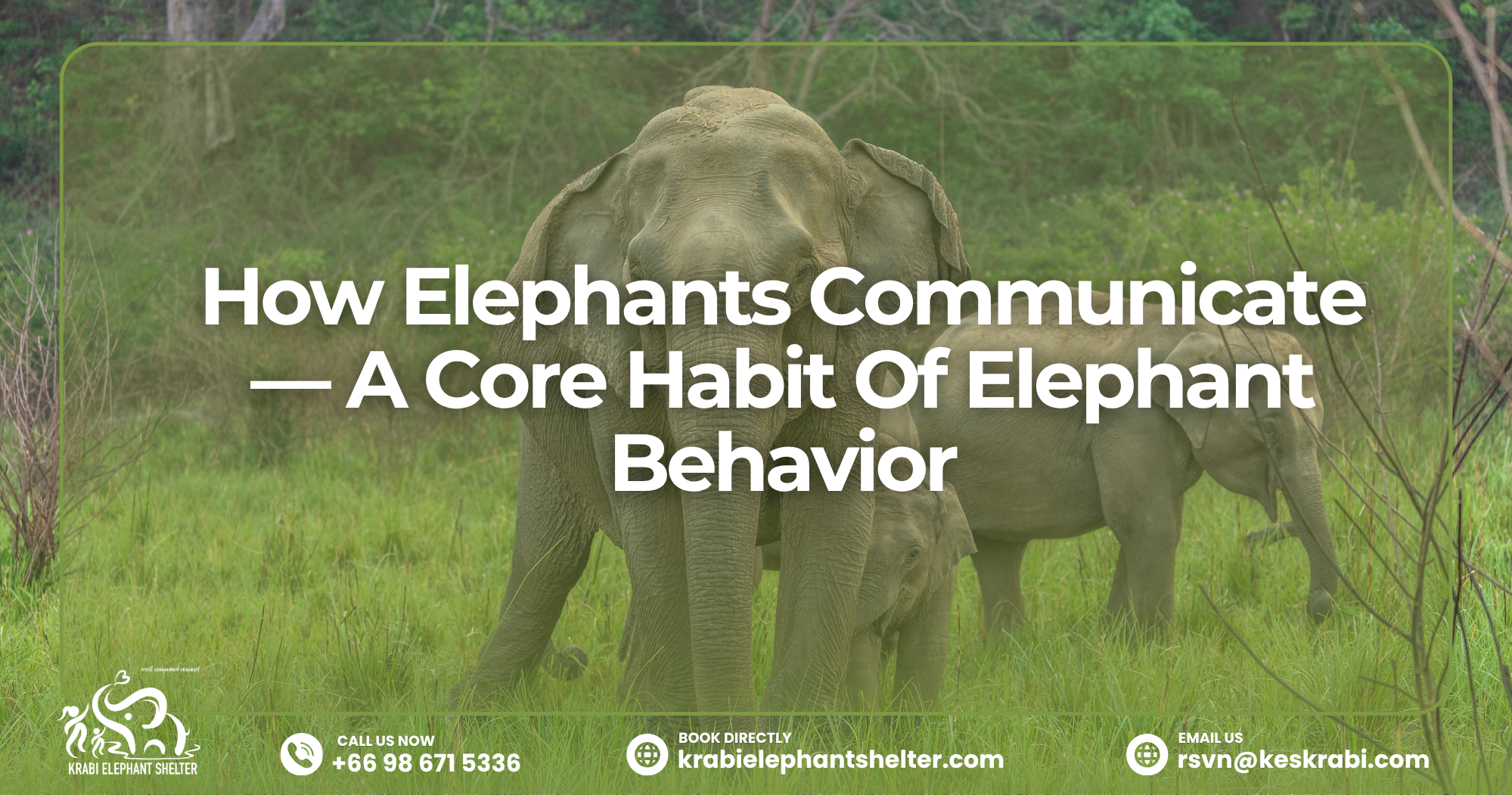
Elephant communication relies on infrasound, which is their characteristic signal over long distances or their communication at a distance. They make deep rumbles that not only carry through the air but also through the ground over several kilometers. Other elephants can then notice these vibrations through their feet and even their trunk, which has very sensitive skin. So, a group of elephants can ‘feel’ a message before they ‘hear’ it.
On the surface, elephants also use many different vocalizations. Trumpeting is their way of expressing excitement, alarm, or a social greeting. Rumbles, on the other hand, communicate complicated social information, such as contact calls, reassurance sounds, and the announcement of musth by bulls. In addition, researchers have found that elephants make specific calls when reuniting with family members after separation.
Additionally, elephant body language reveals their communication habits. Ear position, tail carriage, head angle, and trunk movement together communicate an elephant’s mood and intention. For example, a calm elephant will have its ears hanging loosely. One that is on its guard will be spreading its ears wide. And one that is angry will be tucking its tail and will look visibly tense.
What is probably the most personal type of elephant communication is touch. Members of the herd regularly intertwine their trunks, lean on each other, and even cover their distressed companions with their trunks. So, it is the tactile comfort that is the elephant’s version of an embrace.
Social Structure And Family Groups, Main Elephants’ Habits
Comprehending elephant habits means first understanding their social structure. The rest flows naturally from that.
Females live in matriarchal family units consisting of roughly six to twelve members. The oldest female, the matriarch, is the leader of the group. Her knowledge about water sources, migration routes, and the history of dangers is the herd’s most priceless asset.
Research indicates that herds that are under the leadership of older matriarchs are more capable of surviving droughts and avoiding human conflict than those led by younger matriarchs.
Species Comparison: Key Differences In Elephant Habits
| Behavior | African Bush Elephant | African Forest Elephant | Asian Elephant |
| Ear Size | Very large | Medium | Smaller, rounded |
| Social Group Size | 6–12 females | Smaller groups | 6–10 females |
| Primary Diet | Grass, bark, shrubs | Fruit, leaves, bark | Grass, bamboo, fruit |
| Migration Range | Hundreds of km | Moderate | Shorter corridors |
| Communication Style | Infrasound, trumpeting | Primarily infrasound | Infrasound, chirps |
| Musth Duration (bulls) | 2–3 months | Less documented | 2–3 months |
| Tool Use | Documented | Documented | Documented |
| Sleep Duration | 3–4 hours | 3–4 hours | 3–4 hours |
| Water Needs Daily | Up to 200 liters | Similar | Up to 200 liters |
| Lifespan (wild) | 60–70 years | 60–70 years | 48–65 years |
Feeding Habits Of Elephants: How They Eat To Survive

Adult elephants eat between 150 and 300 pounds of vegetation daily. They spend up to 18 hours a day foraging—grazing grasses, stripping bark, pulling up roots, and reaching high branches with their trunks. So feeding isn’t passive. It’s a constant, active pursuit that shapes their entire daily routine.
Diet varies significantly by habitat. African bush elephants consume mostly grasses during wet seasons and shift to bark and woody vegetation during dry periods. Asian elephants favor grasses, bamboo, and a wide variety of forest plants. Both species show sophisticated dietary flexibility—adjusting what they eat based on seasonal availability and nutritional needs.
Elephants also engage in geophagy—deliberately eating mineral-rich soil. This elephant’s diet supplements it with sodium, calcium, and trace elements that plant-based food alone doesn’t always provide. They actively seek out specific locations, sometimes traveling considerable distances to access those mineral deposits.
Water consumption is equally significant in the daily feeding habits of elephants. Adult elephants drink up to 200 liters daily. During dry seasons, they dig into dry riverbeds with their tusks and feet to access underground water—a behavior that additionally benefits other species sharing the same habitat.
Daily Routines: The Rhythm Of Elephant Habits Throughout The Day
Mostly, elephants get to feed early in the morning and late in the afternoon. Then, the midday heat forces them to seek shade and water. Quite often, they rest during the hottest miles by simply standing and sometimes lie down completely when they want a deeper sleep. On average, adult elephants have only three to four hours of sleep daily, making them among the sleep-deprived mammals on Earth.
Mud bathing is an integral part of elephants’ daily routine, regardless of their species. First, elephants cover their bodies with mud to protect their skin from the sun and, at the same time, to get rid of irritating insects. It is a dual function of the mud that it also cools them down as it dries. Apart from the health aspects, gatherings for bathing in the waterholes act as a socializing activity for the elephant herds, and at the same time, they strengthen their bonds.
When it gets dark, the elephants are already getting ready for their next meal, and in fact, they can keep going for hours at night. Since they live close to humans, some elephant groups have adapted their behavior. They become more active at night to avoid conflicts with people. This shift shows how flexible they are and how readily they can change their behavior.
A Seasonal Habit Of Elephants Worth Understanding
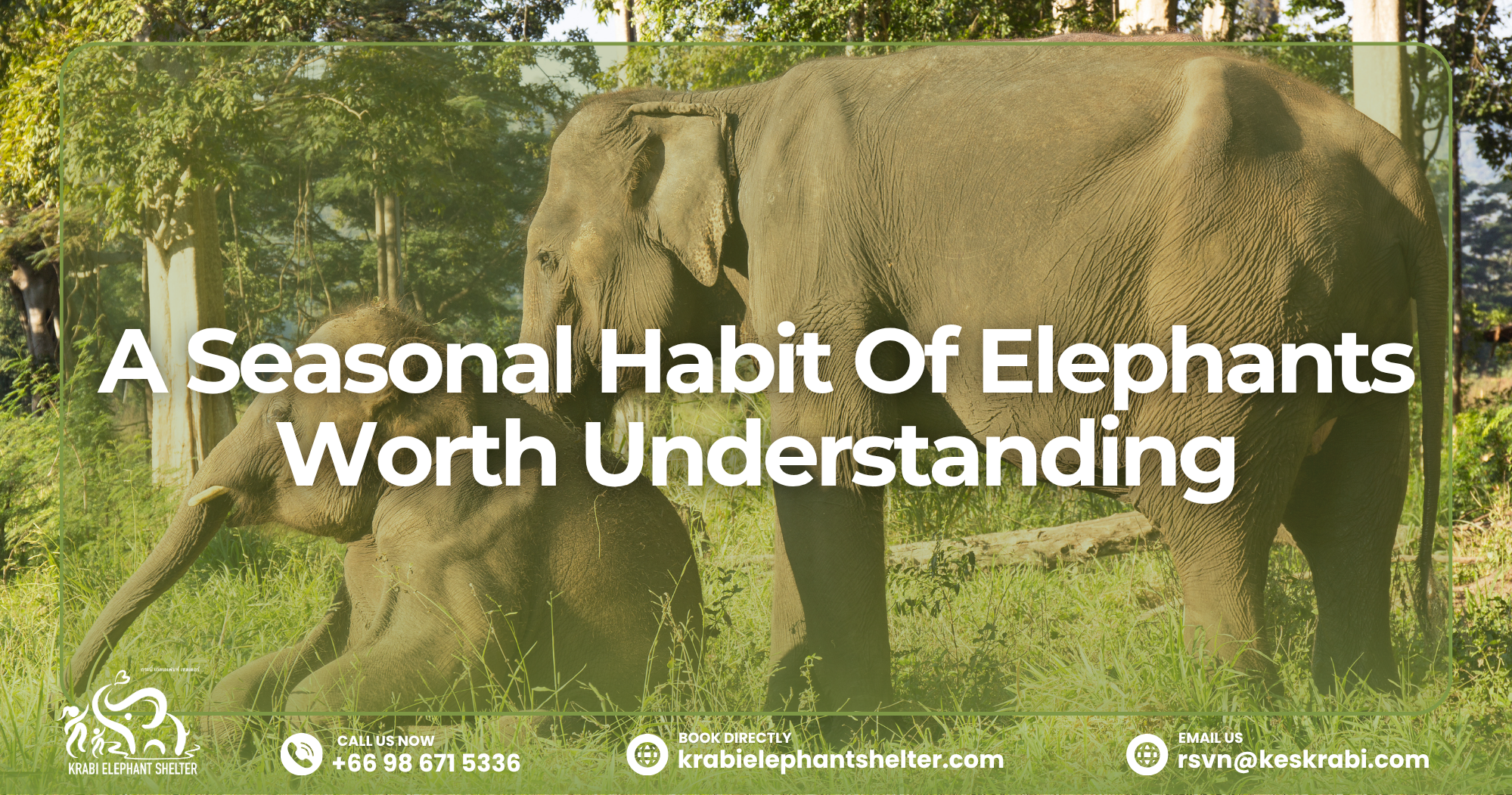
The migration strategies that follow the rainfall patterns of African elephant herds lead to travels over huge areas and, in some cases, up to hundreds of kilometers per year. It is always the oldest female or the matriarch of the herd that directs these traveling routes based on memories of up to several decades of when, where, water, and food became available during the drought periods. Thus, the knowledge of the elders in the family is a treasure that has no substitute and cannot be produced artificially.
The very foundation of elephant care at Krabi Elephant Shelter is the respect and knowledge of natural elephant behavior. In fact, if you want to see how elephants live without interference, the programs at Krabi Elephant Shelter make that possible. You can learn more about their true nature and even meet them face to face. Visit our website and create your own itinerary that really speaks to who elephants are deep down.