Most people assume all animals can jump. It seems like such a basic physical ability. But the animal kingdom is full of surprises—and one of the most fascinating involves a creature that weighs up to seven tons and has never left the ground voluntarily in its life.
So, what animal can’t jump? The most well-known answer is the elephant. And the reasons why tell you a lot about how biology, evolution, and sheer size work together.
Why Can’t Elephants Jump?
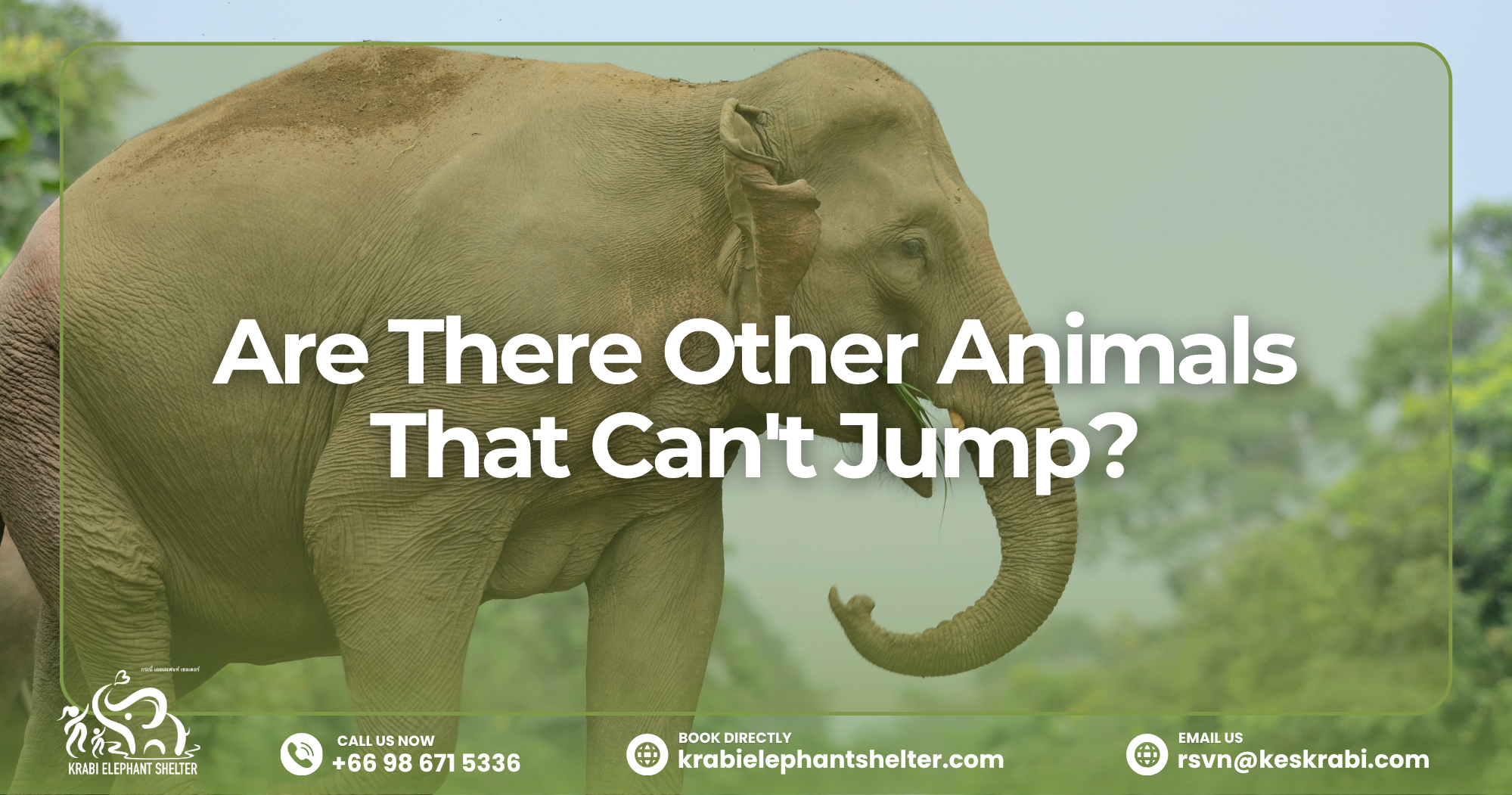
An adult African elephant weighs between 4,000 and 7,000 kilograms. An Asian elephant weighs between 2,700 and 5,000 kilograms. Jumping requires an animal to generate enough upward force to lift its entire body off the ground simultaneously. At that kind of mass, the energy required is simply not worth the risk.
But here’s the more interesting part—elephants don’t jump because their bodies were never designed for it. Evolution shaped them for endurance, not explosive movement. Their legs function more like load-bearing columns than springs. They’re built to carry enormous weight across long distances, not to generate the sudden burst of energy that jumping demands.
The leg structure matters enormously here. Most jumping animals have a pronounced bend in their hind legs—think of a cat, a frog, or a kangaroo. That bend acts like a coiled spring, storing energy and releasing it explosively upward. Elephant legs are straighter, more vertical, and positioned directly beneath the body. There’s no spring mechanism. There’s no stored energy waiting to release.
So when people ask what animal can’t jump, the elephant sits at the top of that list, not because it’s weak, but because it’s built for something entirely different.
What Makes Elephant Anatomy Different?
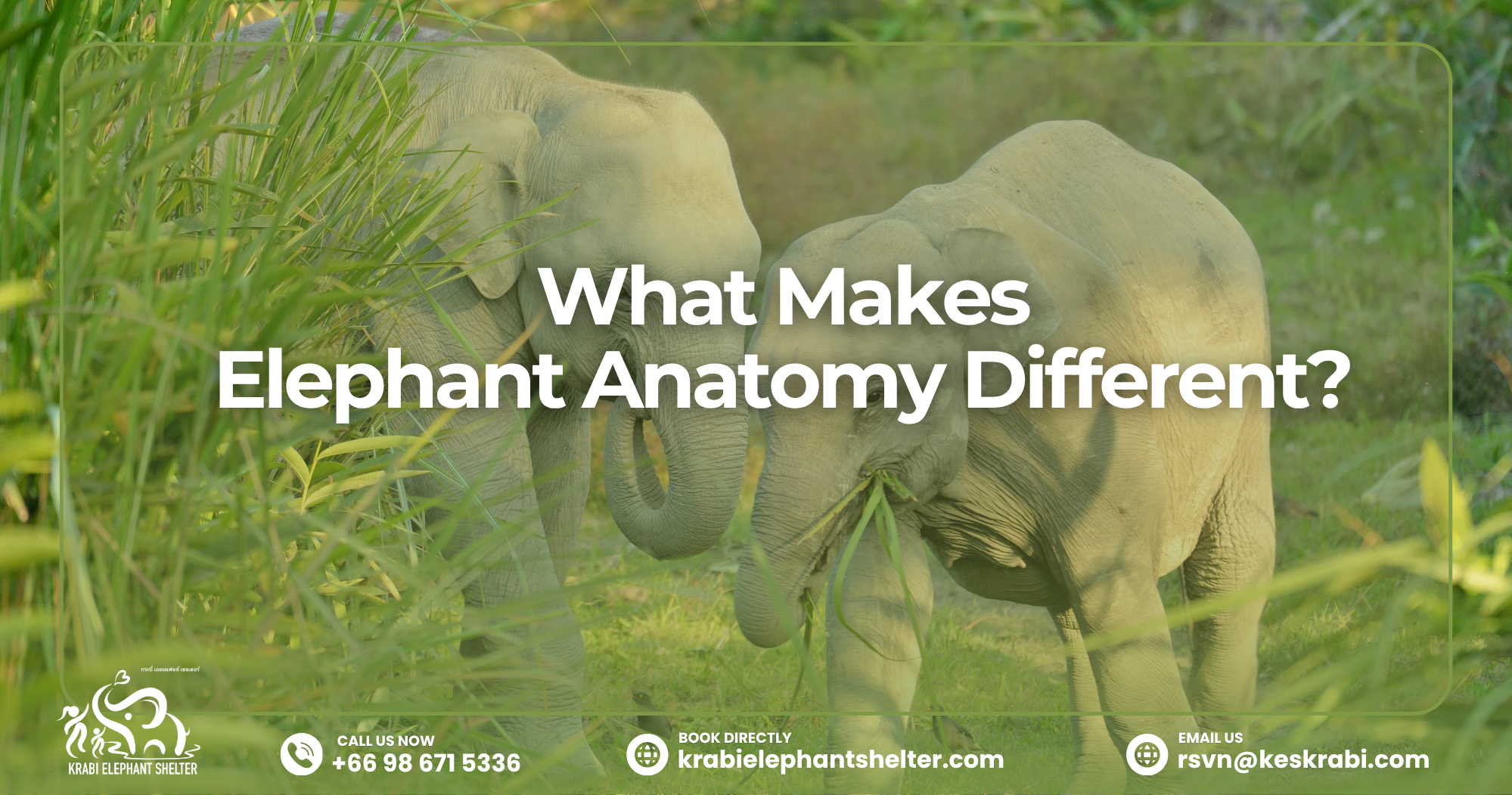
Start with the bones. Elephant leg bones are dense and thick, among the densest of any land animal. That density effectively supports an enormous body weight. But dense bones are also heavy bones. The physics simply don’t cooperate when trying to lift all four of their legs off the ground simultaneously, against gravity, at that scale.
The feet are another key factor. Elephant feet are large, cushioned, and designed to distribute weight evenly across a wide surface area. Underneath the skin sits a thick pad of fatty, fibrous tissue that acts like a natural shock absorber. That pad works beautifully for walking on varied terrain. It isn’t built for the impact of landing a jump.
Consider what happens when a human jumps and lands badly: a sprained ankle, a stress fracture. Now scale that force up to five or six thousand kilograms, landing on four legs simultaneously. The structural damage would be catastrophic. Evolution, very sensibly, never went there.
Muscle distribution also plays a role. Elephants carry enormous muscle mass—particularly in the shoulders, neck, and legs. But that muscle is built for sustained power and load-bearing, not for the fast-twitch explosive contractions that jumping requires. It’s the difference between a powerlifter and a high jumper. Both are strong. They’re strong in completely different ways.
The center of gravity matters too. Elephants carry most of their mass high and centrally in the body and head. Jumping requires a controlled shift in the center of gravity that their body proportions simply don’t allow for cleanly.
Do Elephants Run Instead Of Jump?
Elephants can reach speeds of up to 25 kilometers per hour. Some sources cite faster speeds over short distances. But technically, elephants never actually run in the biological sense. They fast walk.
True running requires a moment where all four feet leave the ground simultaneously, a period of full suspension. Elephants never reach that point. At least one foot stays in contact with the ground at all times, even at top speed. So biomechanically, what looks like running is actually an extremely fast walk.
That said, don’t let the technicality mislead you. A fast-walking elephant covering ground at 25 kilometers per hour is still an impressive and formidable sight. Their stride lengthens dramatically at speed. The ground shakes. It doesn’t feel like walking when you’re nearby.
Interestingly, elephants do something at high speed that researchers call a “grounded running gait”—where their legs move with the timing of a run even though their feet maintain ground contact. It’s a biomechanical middle ground that’s unique to elephants among large mammals.
So while elephants can’t jump and don’t technically run, they’ve developed a movement strategy that covers ground effectively at their scale. Evolution found a workaround, as it usually does.
Are There Other Animals That Can’t Jump?
- Hippos share a similar situation. They’re the third largest land animal and, like elephants, carry too much weight to generate the upward force jumping requires. Hippos can move surprisingly fast in water and on land, but they stay firmly grounded doing it.
- Rhinos also can’t jump. Their body structure is heavy and low‑slung, with thick legs built for stability, and it doesn’t support the mechanics of takeoff. A charging rhino is intimidating precisely because all that mass stays connected to the earth at all times.
- Sloths can’t jump either, though for entirely different reasons. Their muscle structure is built for slow, energy‑efficient movement through trees. The fast‑twitch muscle fibers for jumping are almost absent in sloths, so they simply don’t have the biological machinery for it.
- Tortoises and large turtles can’t jump; their shells add weight and restrict the flexibility their limbs would need. Their legs are positioned for slow, deliberate movement rather than explosive force.
- Certain fish, like the large whale shark, can’t jump in any conventional sense. However, some fish species such as salmon are impressive leapers. Size and body structure consistently determine jumping ability across species.
Elephants And Tourism: The Bigger Picture
The energy cost of jumping is so high for each of these animals that their body structure probably hasn’t evolved for that kind of movement. In fact, the limitations of an animal reveal to you as much about its biology as its capabilities.
Elephants stand as the best example, and they are probably the most engrossing ones. The fact that they cannot jump is only one aspect of a much bigger picture that proves how remarkable these creatures really are.
If this narrative captivates you, then nothing can portray it better than seeing elephants in a really authentic sanctuary setting. Krabi Elephant Shelter is the whole experience: actual elephants, natural behavior, and a connection you don’t forget. Visit our website and find out what is achievable when the welfare of elephants is truly a priority.